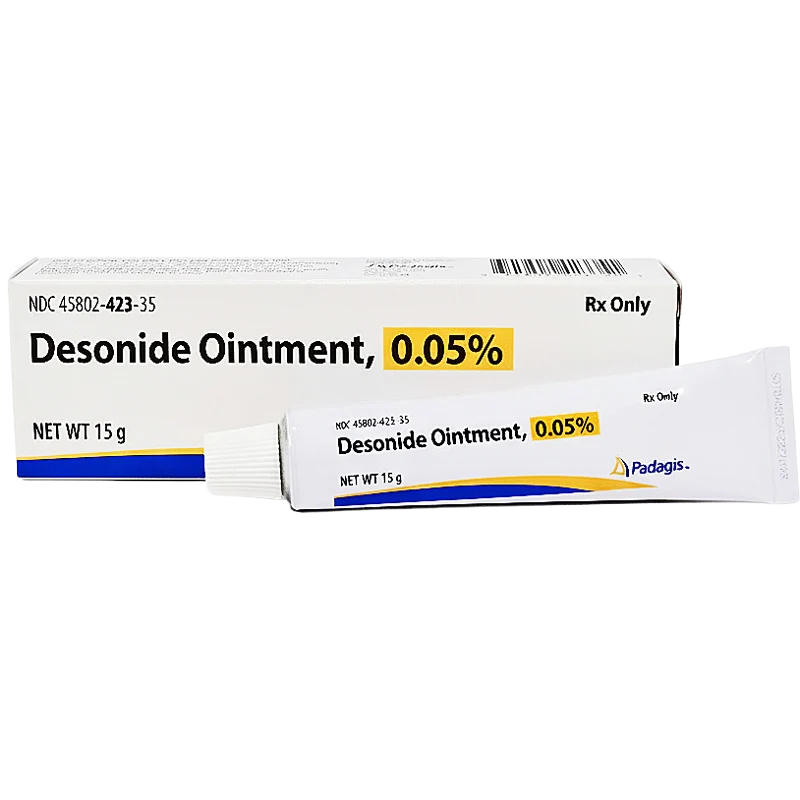
Desonide 0.05%
Cream · Topical
A non-fluorinated low-potency steroid that clears mild eczema flares with a safety profile specifically suited to the face, eyelids, and skin folds.
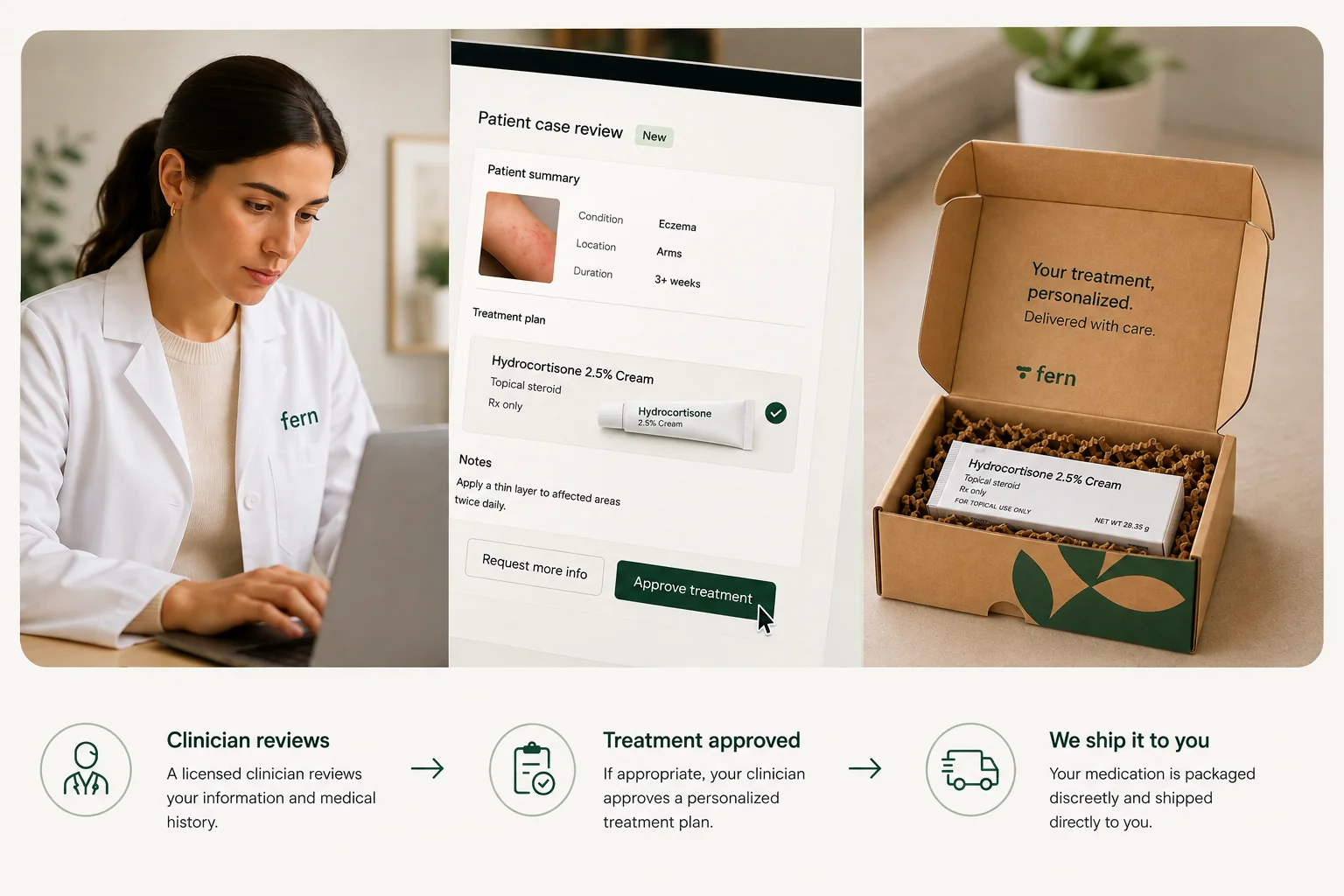
Available nowIncluded in your plan if prescribed · Rx required
You won’t be charged until a clinician reviews and approves your case.
Start your assessment →Not sure this is right for you? Take the quiz →
Why is Desonide 0.05% included?
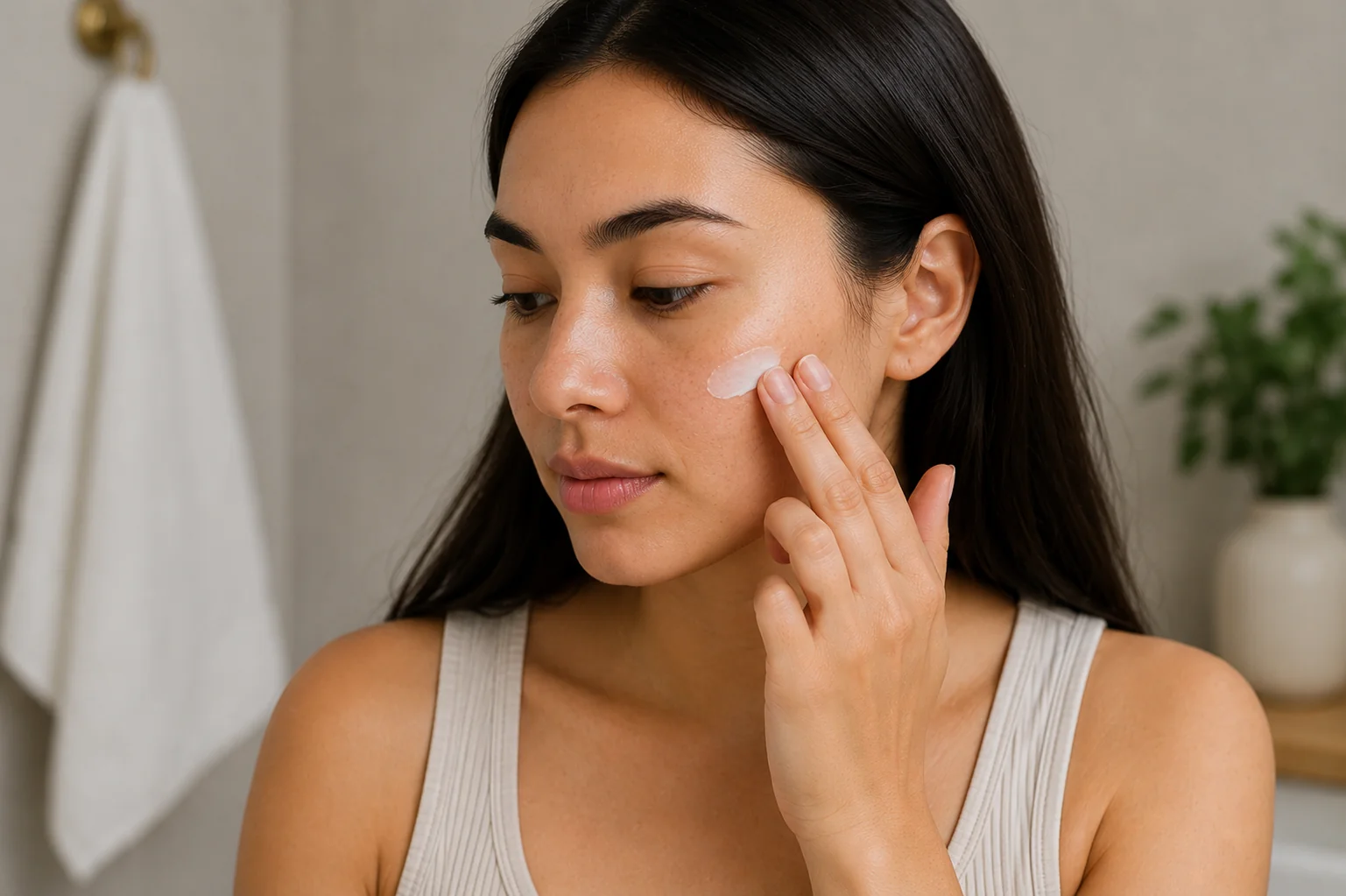
Not all low-potency steroids are identical. Desonide's key feature is that it's non-fluorinated, it lacks the fluorine atom that makes most mid- and high-potency steroids more effective but also more likely to cause skin thinning over time. For eczema on the face, around the eyes, and in the skin folds under the arms, groin, and behind the knees, this matters. These are the areas where eczema is both most common and where the skin is thinnest and most vulnerable to atrophy from fluorinated compounds.
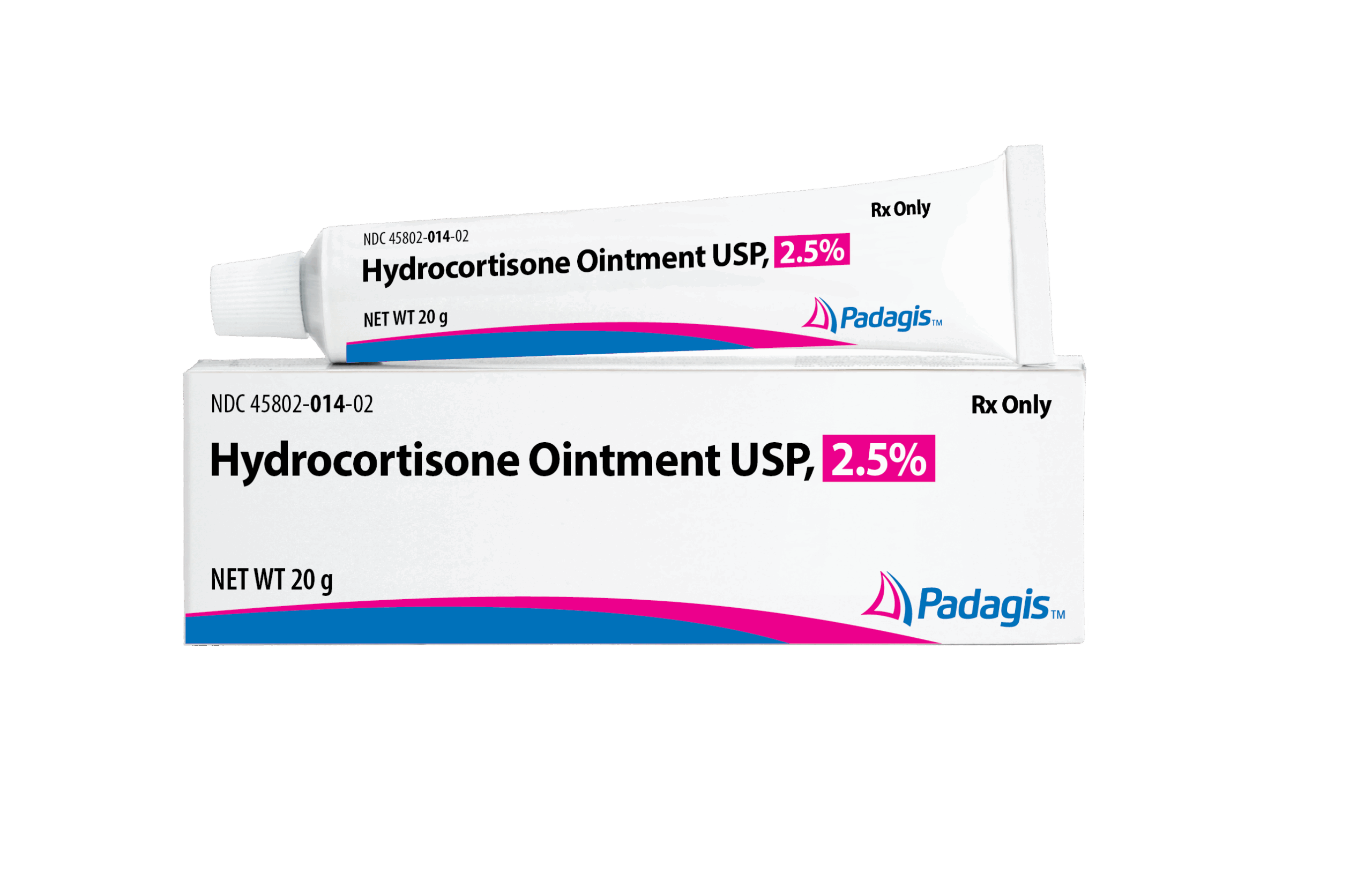
Hydrocortisone 2.5% and desonide occupy the same potency tier, but desonide is often the preferred prescription choice specifically for eyelid eczema and periorbital involvement, areas where even low-level steroid-related side effects are particularly unwanted given proximity to the eye. Clinicians often choose between the two based on affected location, frequency of use needed, and patient history with each compound. Some patients who don't respond well to hydrocortisone respond better to desonide, and vice versa, despite their similar classification.
How does it work?
Desonide binds to glucocorticoid receptors in skin cells and suppresses the transcription of pro-inflammatory genes. The result is reduced production of cytokines like IL-4, IL-13, and TNF-α (the key molecules that drive eczema inflammation. It also causes mild vasoconstriction in inflamed skin, which reduces the visible redness and surface heat that characterize active flares. Because it's non-fluorinated, its effect on the skin's structural proteins (collagen and elastin) is gentler than fluorinated steroids) the cells absorb it and respond to it, but it's less likely to impair the structural integrity of the skin over time.
The 60g tube (versus 30g for hydrocortisone 2.5%) reflects that desonide is often used over larger body surface areas or in longer courses on the trunk and limbs before escalating to a mid-potency option.
How strong is the evidence?
Desonide 0.05% has strong, specific clinical trial data for atopic dermatitis, including dedicated RCTs in children and adults. A key differentiating study: controlled trials of desonide for eyelid and facial eczema show meaningful clearance rates with a favorable adverse event profile compared to more potent agents. Multiple vehicle-controlled trials confirm superiority over placebo for reducing EASI (Eczema Area and Severity Index) scores. The AAD includes desonide among its recommended low-potency agents for facial and flexural eczema in its clinical practice guidelines.
The foam formulation of desonide (Verdeso) has specific approval for atopic dermatitis, which also supports the evidence base for the molecule's use in this condition, the cream formulation here is the standard delivery vehicle.
What are the limitations and risks?
Desonide is still a topical corticosteroid, and the same principles apply: it's for interrupting flares, not indefinite continuous use. Prolonged daily application even of a non-fluorinated low-potency steroid carries some risk of skin thinning, particularly on already-thin skin. The non-fluorinated status reduces but doesn't eliminate this risk.
It is not appropriate for infected skin. If there's any sign of bacterial superinfection (oozing, crusting, increased warmth, pain rather than itch) the infection needs to be addressed first. Applying a steroid over infected eczema suppresses the immune response that is fighting the infection.
For very acute, severely inflamed flares on the body (trunk, limbs), desonide may not be potent enough to interrupt the cycle quickly. In those cases, a mid-potency steroid is usually more appropriate, and your clinician can escalate accordingly.
Frequently Asked Questions
Both are low-potency, but desonide is non-fluorinated. In practice, this means it's slightly preferred for eyelid and periorbital eczema where minimizing any atrophy risk is especially important. Some patients also find one works better for them than the other, response isn't always predictable within a potency class.
Desonide is one of the few steroids specifically used for eyelid eczema. Prolonged use even here should be avoided, but for a controlled course to clear an active eyelid flare, it's an appropriate choice. Extended or repeated use around the eyes carries a small risk of increased intraocular pressure (glaucoma), your clinician will take this into account.
For acute flares, typically 7–14 days twice daily until clear. Do not continue applying once the flare has resolved. If you're having frequent recurrences, discuss a proactive maintenance protocol (e.g., twice-weekly application to historically affected skin) rather than treating reactively each time.
Yes: skin folds are exactly where desonide's non-fluorinated profile is most valuable. These are sites of high moisture and friction where fluorinated steroids pose a higher atrophy risk. Twice-daily application for short courses is appropriate; long-term use in folds should be discussed with your clinician.
Tachyphylaxis, reduced responsiveness with continuous use, can occur with any topical steroid. Taking breaks between treatment courses helps maintain efficacy. If you're not seeing the expected response after a full 7-day course, that's worth flagging to your clinician, who may consider switching to a different low-potency compound or escalating to mid-potency.
Low-potency non-fluorinated topical steroids are among the safest options when a topical steroid is needed during pregnancy, though short courses on limited areas are recommended. The data for desonide specifically during pregnancy is limited compared to hydrocortisone, but it's generally considered acceptable for brief, targeted use. Disclose your pregnancy status in the intake so your clinician can weigh this explicitly.
Ready to get a personalized treatment plan?
Fern clinicians review every case individually. Most patients hear back in under 3 hours.
Start your free assessment →This information is for educational purposes only and is not medical advice. Consult with a healthcare provider before starting any treatment.