Treatments / Cream / Ointment

Betamethasone dipropionate 0.05%

Cream / Ointment · Topical

A high-potency steroid for established, moderate-to-severe eczema flares on the trunk and extremities that haven't responded to mid-potency options.

Available now

Included in your plan if prescribed · Rx required

You won’t be charged until a clinician reviews and approves your case.

Start your assessment →

Not sure this is right for you? Take the quiz →

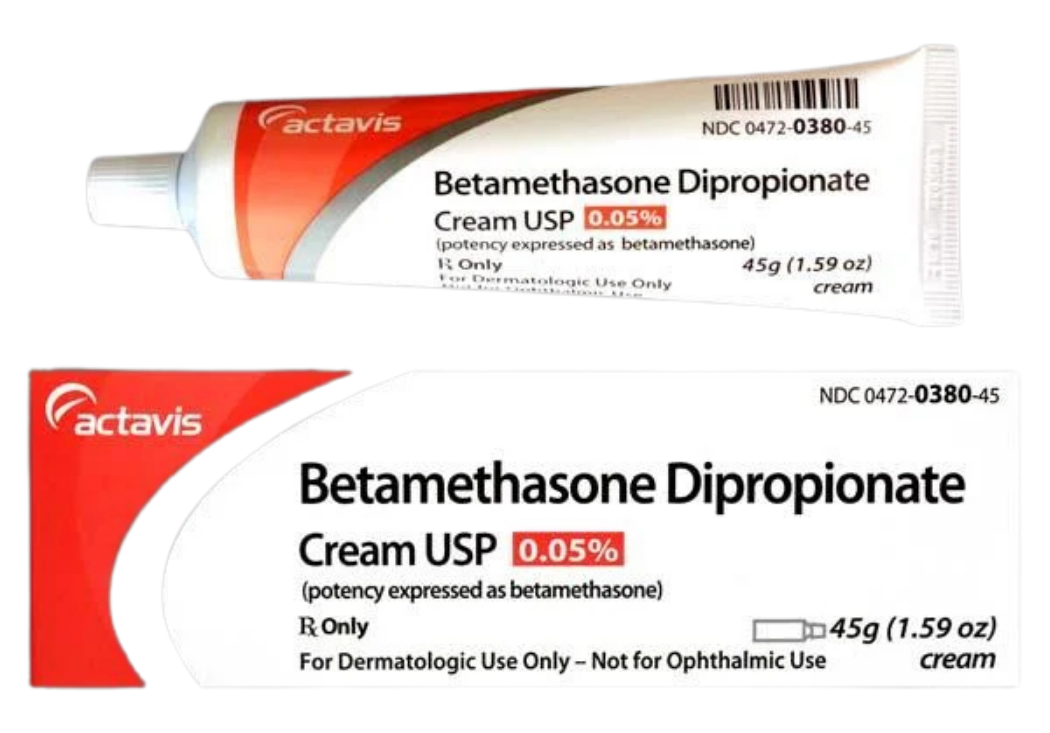
Betamethasone dipropionate 0.05% cream tube

Why is Betamethasone dipropionate 0.05% included?

Betamethasone dipropionate is a high-potency fluorinated corticosteroid (one step below the super-high-potency class, and substantially more potent than mid-range agents like triamcinolone or mometasone. It's not a first-line choice for eczema management. It's the drug your clinician reaches for when the situation calls for faster, more complete clearance than a mid-potency compound can deliver) severely inflamed, thickened patches that have been present for weeks, extensive trunk involvement, or flares on the palms and soles where skin is thick enough to tolerate high-potency agents and barrier-driven inflammation tends to be more refractory.

Used correctly (short courses on appropriate body areas, not on the face or folds, not chronically) betamethasone dipropionate has a well-established clinical role. It's been used in dermatology for decades. The risks are real, but they're well-characterized and largely avoidable with proper prescribing and patient education.

How does it work?

Same mechanism as other topical corticosteroids (glucocorticoid receptor binding, NF-κB suppression, reduced cytokine production) but at significantly higher potency. The dipropionate ester and the fluorine atom at the 9-alpha position both contribute to its high affinity for the glucocorticoid receptor and to its enhanced penetration through the skin barrier. In practical terms: it suppresses the same inflammatory mediators as lower-potency steroids, just more rapidly, more completely, and at greater depth in the dermis.

The ointment formulation is the more potent vehicle for betamethasone, the augmented dipropionate formulation in gel or ointment is even stronger (Class I). The cream formulation included here is the non-augmented version, which sits solidly in Class III (high potency) rather than super-high.

How strong is the evidence?

High-potency topical steroids as a class have strong RCT evidence for moderate-to-severe atopic dermatitis and plaque psoriasis. Betamethasone dipropionate specifically has decades of controlled trial data, numerous head-to-head comparisons against mid-potency agents, and consistent findings: faster clearance, higher complete response rates for established flares on body sites compared to Class IV and Class V agents. It appears in treatment algorithms as the step-up from mid-potency when adequate response isn't achieved.

For eczema specifically, the evidence supports short-course use (typically 1–2 weeks) for acute exacerbations, not ongoing management. The risk-benefit calculation shifts unfavorably with longer use.

What are the limitations and risks?

The risks scale with potency. Betamethasone dipropionate has a meaningfully higher risk of skin atrophy than mid-potency steroids, and this can occur relatively quickly, within 2–3 weeks of daily use on thin-skinned areas. It is absolutely contraindicated on the face, neck, eyelids, groin, axillae, and other flexural/fold areas. These are not soft guidelines; using high-potency steroids on the face can cause irreversible atrophy and telangiectasia.

HPA axis suppression, reduced endogenous cortisol production, is a real concern with high-potency agents applied over large body surface areas. For a small-to-moderate application area and a short course (1–2 weeks), the risk is low but non-zero. The risk increases with: larger surface area, longer duration, occlusion, thin skin, young children, and concurrent use of other steroids. Your clinician weighs these when prescribing.

Do not use on infected eczema. At this potency level, the immunosuppressive effect is substantial enough that bacterial or viral infections can spread rapidly if steroids are applied over them.

Frequently Asked Questions

Betamethasone dipropionate is the appropriate step-up when mid-potency steroids (triamcinolone, fluticasone, mometasone) haven't produced adequate clearance after a full course, or when the initial presentation is severe enough (thick, lichenified patches on the trunk or limbs) that starting with a mid-potency agent is unlikely to be sufficient. Your clinician won't prescribe it for mild-to-moderate eczema on the face or folds.

Typically no more than 2 consecutive weeks on any area. After the flare clears, stop. Do not use it continuously or as maintenance, both the atrophy risk and HPA suppression risk increase substantially with duration. If you need ongoing management, that's a conversation about stepping down to a mid-potency maintenance strategy or considering non-steroidal options.

The cream is prescribed here because it suits acute, inflammatory flares. If you have a predominantly dry, thickened presentation and the cream doesn't seem to be penetrating, mention this at follow-up, ointment may be more appropriate. Do not independently switch to the augmented (betamethasone dipropionate augmented) formulation; that's a different, higher-potency product.

Wash it off with water immediately. One inadvertent application is unlikely to cause lasting harm, but don't continue using it there. If you've been applying it to your face for several days, examine the skin for increased shininess, visible vessels, or unusual fragility, and contact your clinician.

After a short course (1–2 weeks), stopping without taper is generally fine. After longer use, some patients experience a rebound flare, and there's a condition called topical steroid withdrawal (sometimes called red skin syndrome) associated with prolonged, widespread use of high-potency steroids. This is more of a risk with months of inappropriate use than with a properly supervised short course. If you've been using betamethasone for an extended period, discuss the discontinuation approach with your clinician.

Yes: the palms and soles are among the appropriate sites for high-potency steroids because the skin is significantly thicker there. Dyshidrotic eczema (blistering eczema of the hands) and palmoplantar eczema can be resistant to mid-potency steroids and often benefit from betamethasone dipropionate for short courses.

Ready to get a personalized treatment plan?

Fern clinicians review every case individually. Most patients hear back in under 3 hours.

Start your free assessment →
Dr. Chethana Gottam, M.D., Board Certified Dermatologist

“There’s a specific look I recognize in eczema patients who’ve been managing on their own too long. They’ve stopped believing it can get better. Fern shortens that window of suffering. It gets people into real treatment before hopelessness sets in.”

Dr. Chethana Gottam, M.D.
Board Certified Dermatologist