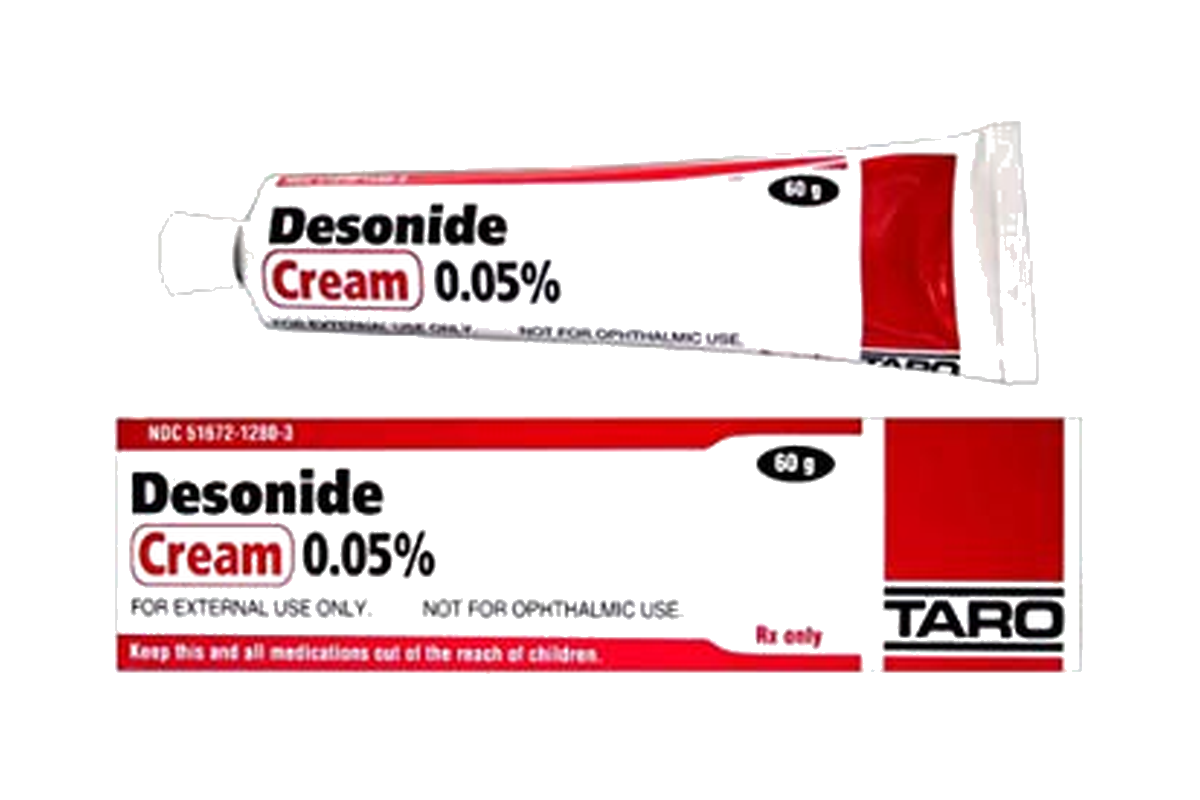
Desonide 0.05%
Cream · Topical · Pediatric
A non-fluorinated low-potency steroid specifically suited to children's sensitive skin, preferred by many pediatric dermatologists for facial and flexural eczema because it produces less skin thinning risk than fluorinated alternatives at equivalent potency.
Available nowIncluded in your child’s plan if prescribed · Rx required
You won’t be charged until a clinician reviews and approves your child’s case.
Start your child’s assessment →Not sure this is right? Take the quiz →
Why is Desonide 0.05% included?
Desonide and hydrocortisone 2.5% occupy the same potency tier, but they are not identical. The key difference is structural: desonide is non-fluorinated, meaning it lacks the fluorine atom that increases potency but also increases the risk of skin thinning over time. For pediatric eczema (particularly facial, eyelid, and flexural involvement where children need effective treatment they can use more liberally without accumulating atrophy risk) desonide is often the preferred prescription steroid.
Pediatric dermatologists commonly choose desonide specifically for children with eczema involving the eyelids and periorbital skin, where parents understandably worry about long-term effects of any medication near the eye. Desonide's non-fluorinated profile makes it gentler on this tissue than any fluorinated compound, including low-potency ones. The foam formulation (Verdeso) is FDA-approved for atopic dermatitis in children as young as 3 months, which speaks to the molecule's established safety profile in very young patients. The cream formulation prescribed here is the standard vehicle for most pediatric presentations.
The 60g tube reflects that desonide is often used across broader areas or in longer courses before escalating to mid-potency steroids on the trunk and limbs, which children outgrow the need for as they move through childhood.
How does it work?
Desonide binds to glucocorticoid receptors in skin cells and suppresses the inflammatory transcription factors (NF-κB, AP-1) that drive cytokine production in eczema. The mechanism is identical to hydrocortisone, and the difference is pharmacokinetic: without the fluorine substituent, desonide binds with slightly lower affinity to glucocorticoid receptors and produces proportionally less effect on collagen-producing cells in the dermis, which is what makes it gentler on skin structure with prolonged use.
In children, whose skin collagen and structural proteins are still developing, the reduced structural disruption from non-fluorinated steroids is particularly relevant. This doesn't mean fluorinated steroids are contraindicated in children at appropriate potencies and body sites, triamcinolone on the trunk is appropriate, but for the face and folds in young children, the non-fluorinated option is the more conservative choice for long-term skin health.
How strong is the evidence?
Desonide 0.05% has specific pediatric RCT data for atopic dermatitis, including the Verdeso foam trials in children as young as 3 months. The evidence supports its efficacy for mild-to-moderate pediatric AD on the face and body. The AAD and other pediatric dermatology guidelines include desonide among their recommended low-potency agents for childhood eczema, specifically noting its suitability for facial and flexural use in young children.
Long-term safety data from multiple studies confirms the absence of significant HPA axis suppression at standard doses in children, and the non-fluorinated structure is consistently associated with lower atrophy rates compared to fluorinated compounds in head-to-head comparisons.
What are the limitations and risks?
The same systemic absorption concern that applies to all topical steroids in children applies here. Desonide's non-fluorinated, lower-potency status reduces atrophy risk but doesn't eliminate all steroid-related concerns. Thin layers, affected areas only, and short courses remain the right approach.
For severe or highly inflamed eczema on the trunk and limbs, desonide may not provide sufficient anti-inflammatory activity. If a full 7–14 day course on body sites isn't producing adequate clearance, the flare may warrant a mid-potency steroid on those body-site areas (where it is appropriate) rather than an extended low-potency course.
As with all topical steroids: do not apply to infected skin, do not use under tight occlusion unless specifically directed, and do not apply to skin that is actively broken or bleeding without clinician guidance.
Frequently Asked Questions
Both are low-potency, but desonide is non-fluorinated. For most body sites, the clinical difference is small. For the face, eyelids, and skin folds, the most common sites of childhood eczema, desonide's non-fluorinated profile is the reason many pediatric dermatologists prefer it as a long-term tool. Some children also respond better to one molecule over the other despite similar classification.
The Verdeso foam formulation of desonide is FDA-approved for atopic dermatitis starting at 3 months of age. The cream formulation here doesn't carry a specific infant indication in the same way, but it has a long history of use in infants by pediatric dermatologists for short-course facial treatment. Your child's age and weight will inform how your Fern clinician prescribes it.
Desonide is one of the preferred options for eyelid and periorbital eczema in children specifically because of its non-fluorinated, low-potency classification. Apply a very small amount to the eyelid skin without getting it inside the eye. Brief courses are appropriate; prolonged eyelid steroid use of any kind carries a small risk of increased intraocular pressure, so don't continue indefinitely without follow-up.
Apply while the skin is slightly damp after bathing, this improves absorption and often feels less uncomfortable to the child. Use the smallest effective amount (it should look like almost nothing on the skin). For very young children, distraction with toys or a song during application helps. The fewer applications needed (once or twice daily rather than three times), the less resistance you'll typically encounter.
True allergic contact dermatitis to hydrocortisone-class steroids is uncommon but possible. Signs are paradoxical: the skin gets worse or develops a new rash pattern rather than better with application. If you notice the eczema spreading rather than clearing, or new redness appearing at the application margins, stop and contact your clinician. Testing for steroid allergy is possible if this pattern recurs.
Stop when the active flare has visibly cleared, when the skin is no longer red, itchy, and inflamed, and has returned to its baseline (which in children with eczema may still be somewhat dry or rough, but not actively inflamed). Continuing after clearance doesn't provide additional benefit and accumulates unnecessary steroid exposure. If the skin clears and then re-flares within a few days of stopping repeatedly, discuss a proactive maintenance approach rather than continuous daily use.
Ready to get a personalized treatment plan for your child?
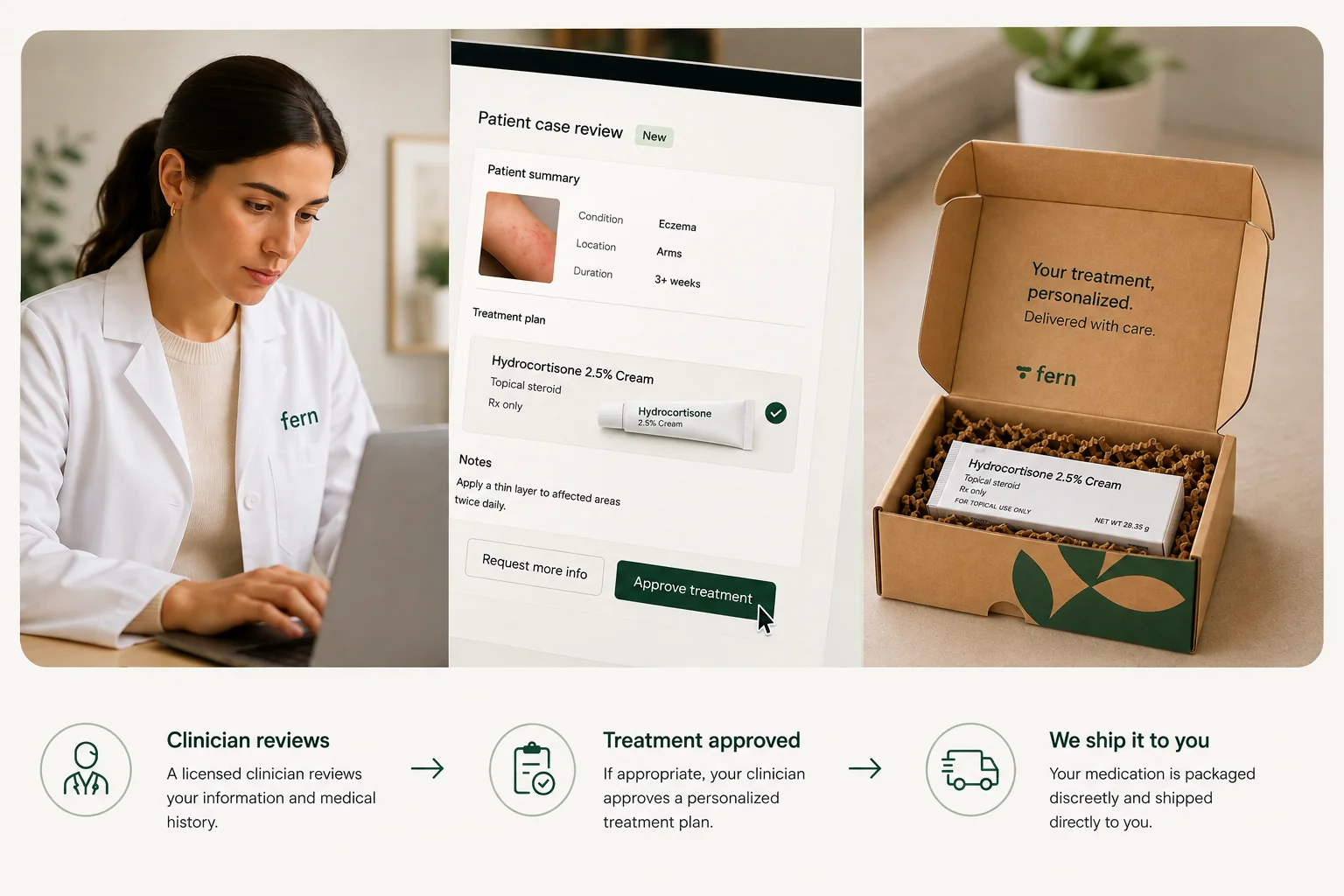
Fern clinicians review every case individually. Most families hear back in under 3 hours.
Start your free assessment →This information is for educational purposes only and is not medical advice. Consult with a healthcare provider before starting any treatment.
“There’s a specific look I recognize in eczema patients who’ve been managing on their own too long. They’ve stopped believing it can get better. Fern shortens that window of suffering. It gets people into real treatment before hopelessness sets in.”