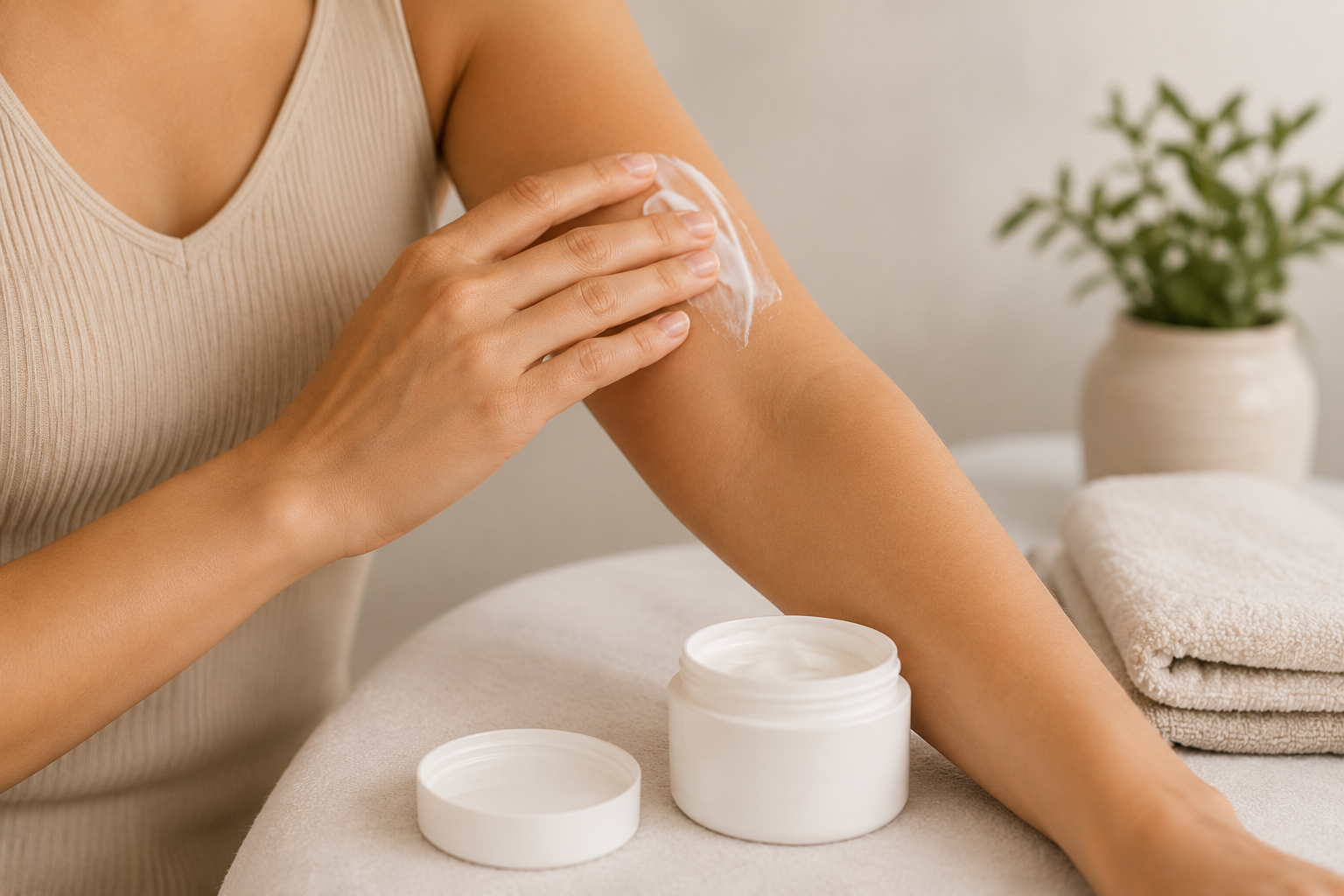
Your eczema routine doesn’t need to be complicated. It needs to be consistent.
When your skin looks calm, it’s tempting to stop moisturizing, take a long hot shower, or use whatever soap is nearby. Then the dryness returns, the itching starts, and suddenly you’re dealing with another flare.
Everyday care can’t prevent every flare, but a few repeatable habits can support your skin barrier and reduce unnecessary irritation.
Here’s what matters most.
1. Moisturize before your skin feels dry
Don’t wait until your skin feels tight or itchy.
Moisturizer helps hold water in the skin and supports the barrier that keeps irritants out. Apply it every day, especially after bathing, washing your hands, or whenever your skin starts to feel dry.
A fragrance-free cream or ointment will usually hold in more moisture than a thin lotion. Apply a generous layer rather than trying to stretch a tiny amount across a large area.
The best moisturizer isn’t necessarily the most expensive one. It’s the one your skin tolerates and you’ll use consistently.
2. Keep showers short and lukewarm
Hot water may feel soothing in the moment, but it can leave eczema-prone skin feeling drier afterward.
Use lukewarm water, choose a gentle fragrance-free cleanser, and avoid scrubbing with a loofah or rough washcloth. When you’re finished, pat your skin dry instead of rubbing it.
Then apply moisturizer while your skin is still slightly damp. This helps trap some of that water before it evaporates.
Think of bathing and moisturizing as one routine, not two separate tasks.
3. Choose fragrance-free products
“Fragrance-free” and “unscented” don’t mean the same thing.
Unscented products can still contain fragrance ingredients that mask other smells. When possible, look for products specifically labeled fragrance-free.
This applies to more than moisturizer. Consider your cleanser, shampoo, deodorant, laundry detergent, fabric softener, and household products that regularly touch your skin.
Before using a new skincare product everywhere, test it on a small area first. And if something burns, stings, or creates new redness, stop using it — even if the packaging says it’s made for sensitive skin.
Your skin gets the final vote.
4. Make clothing and laundry easier on your skin
Your clothes and sheets sit against your skin for hours, so they can matter just as much as your skincare products.
Soft, breathable, loose-fitting clothing is often easier on eczema-prone skin. Rough fabrics, tight seams, tags, wool, and some synthetic materials can increase friction, trap heat, and make itching worse.
Use a fragrance-free, dye-free laundry detergent, and avoid using more than the recommended amount. Wash new clothing before wearing it, and remove tags that repeatedly rub the same area.
You don’t need an entirely new wardrobe. Start by keeping your softest fabrics closest to your skin.
5. Have a plan for heat, sweat, and itching
Exercise is good for you. Sitting in sweaty clothing for hours usually isn’t good for irritated skin.
Wear breathable clothes, take breaks before you become overheated, and change out of damp clothing when you can. After sweating, rinse your skin with lukewarm water, gently pat it dry, and moisturize again.
When itching starts, “just don’t scratch” isn’t very useful advice. Try a cool compress, moisturizer, soft clothing over the area, or the treatment your clinician prescribed.
Keeping your nails short can also reduce how much damage happens when scratching is automatic — especially while you’re asleep.
The goal isn’t perfect self-control. It’s making the itch-scratch cycle easier to interrupt.
6. Track patterns instead of avoiding everything
Eczema triggers are personal. A product that irritates one person may be completely fine for someone else.
Rather than eliminating everything at once, look for patterns. When a flare begins, make a quick note of:
- Where it appeared
- Any new skincare, haircare, or laundry products
- Heat, sweating, or weather changes
- Stress and sleep
- What you used to treat it
You’re looking for repeated connections, not one-off coincidences. Eczema often has more than one trigger, and the combination can change from flare to flare.
This information can also help a clinician understand what may be driving your symptoms.
7. Know when daily care isn’t enough
Moisturizer and gentle skincare are the foundation of eczema care. They don’t always control the inflammation underneath it.
Consider getting clinical help if your eczema:
- Keeps returning despite a consistent routine
- Interferes with sleep, work, school, or daily life
- Is no longer controlled by over-the-counter products
- Is painful, spreading, or rapidly worsening
- May not actually be eczema
Watch for possible signs of infection, including honey-colored crusting, leaking fluid, pus-filled bumps, increasing pain, swelling, or spreading redness. These symptoms deserve prompt medical attention.
Needing prescription treatment doesn’t mean you failed at skincare. It means your skin may need more support.
A simple routine you can repeat
You don’t need a perfect schedule. Start with something realistic.
Morning
Apply moisturizer to dry or eczema-prone areas. Choose soft clothing and fragrance-free products.
After washing or sweating
Pat your skin dry and moisturize before it starts to feel tight.
At night
Take a short lukewarm shower if needed. Use prescribed medication as directed, then moisturize.
That’s it. Nothing elaborate. Just a few habits that are easy enough to keep doing.
The bottom line
The most useful eczema routine is often the least exciting one:
Short showers. Fragrance-free products. A thick moisturizer. Soft clothes. Less heat. A plan for itching.
And if you’re doing all of that and still flaring, it may be time for more than everyday skincare.