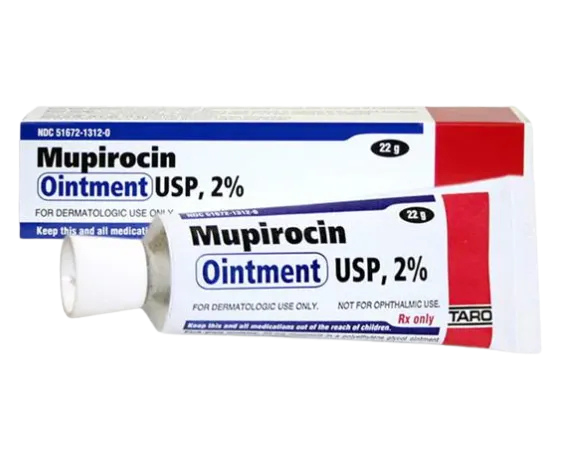
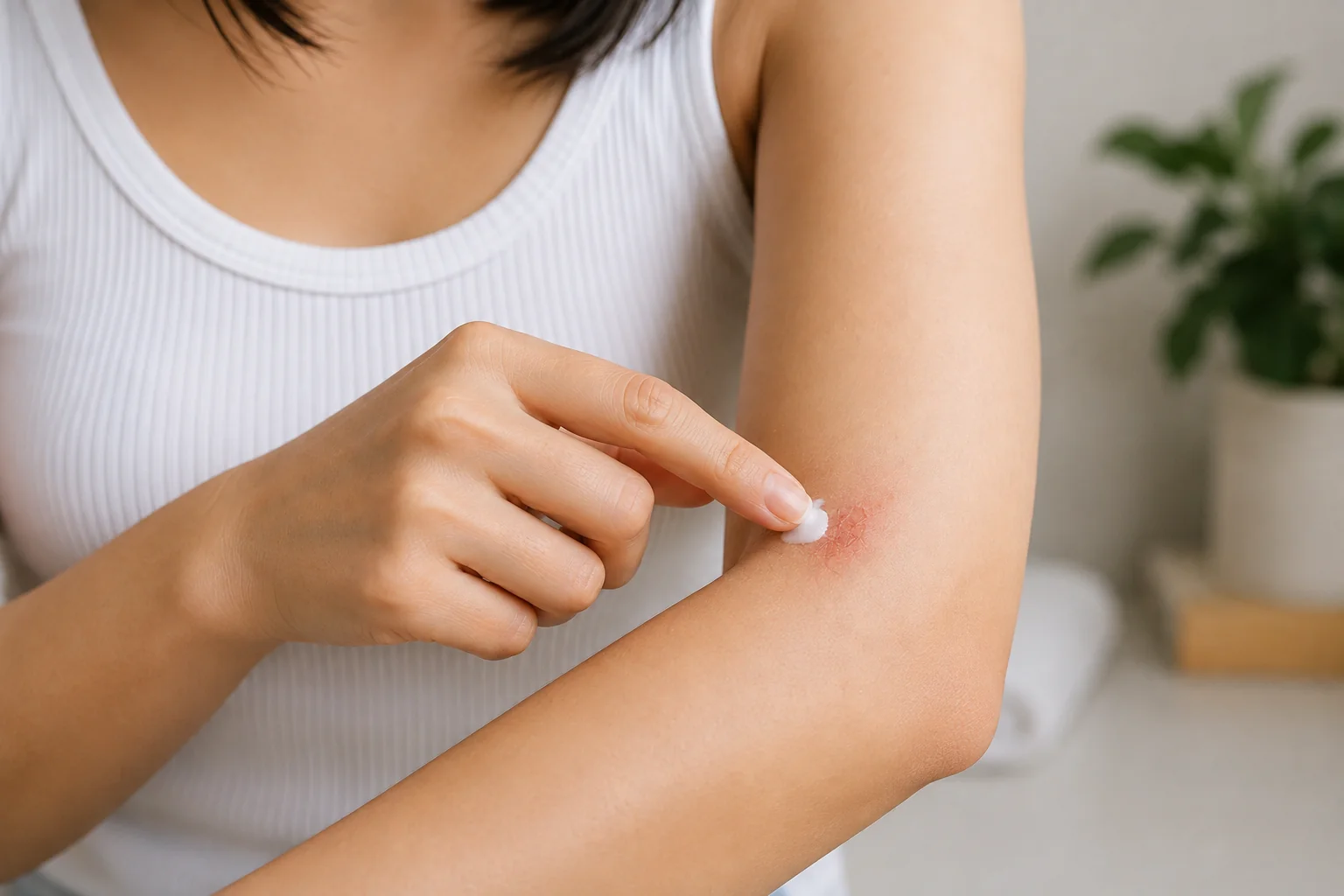
Mupirocin 2%
Ointment · Topical
An antibiotic that targets the bacterial infections that both trigger and perpetuate eczema flares, not an anti-inflammatory, but a prerequisite for effective eczema treatment when infection is present.
Available nowIncluded in your plan if prescribed · Rx required
You won’t be charged until a clinician reviews and approves your case.
Start your assessment →Not sure this is right for you? Take the quiz →
Why is Mupirocin 2% included?
Mupirocin doesn't treat eczema directly. It treats the bacterial infections that eczema skin is uniquely vulnerable to, and those infections, when present, make eczema significantly worse and make anti-inflammatory treatments significantly less effective.
Over 90% of atopic dermatitis patients carry Staphylococcus aureus on their skin, compared to about 20% of people without eczema. The compromised skin barrier in eczema allows Staph to colonize the skin surface at densities that would be cleared by an intact barrier. This isn't incidental: Staph aureus produces exotoxins and superantigens that directly activate skin immune cells and amplify the Th2/Th17 inflammatory response driving AD. In other words, the bacteria don't just infect damaged skin, they actively drive the immune dysregulation that sustains eczema. Reducing Staph colonization is part of treating the disease, not just a side intervention.
Mupirocin is specifically effective against Staph aureus (including many MRSA strains) and Streptococcus, the two gram-positive bacteria most relevant to eczema skin infections. It's prescribed when there are clinical signs of bacterial superinfection (increased weeping, crusting, pain, warmth, or failure to respond to anti-inflammatory treatment) or when targeted decolonization is part of the overall management strategy.
How does it work?
Mupirocin inhibits bacterial isoleucyl-tRNA synthetase, an enzyme bacteria need to incorporate the amino acid isoleucine into proteins. Without this enzyme, bacterial protein synthesis halts and the bacteria cannot reproduce or survive. The mechanism is unique among antibiotics: no other clinically used antibiotic inhibits this enzyme, which means there is no cross-resistance between mupirocin and other antibiotic classes.
Applied topically, mupirocin achieves bactericidal concentrations in the skin and its secretions, clearing Staph aureus from colonized skin surfaces and superficial infections. It doesn't penetrate to deep tissue infections (cellulitis, abscess), it works at the skin surface and shallow epidermal layers.
How strong is the evidence?
Mupirocin is FDA-approved for the treatment of impetigo (a Staph/Strep superficial skin infection) with strong RCT evidence. For atopic dermatitis specifically, the evidence takes two forms. First, multiple RCTs demonstrate that treating Staph superinfection in eczema patients with mupirocin significantly reduces eczema severity scores, confirming that Staph is a disease driver, not just a bystander. Second, decolonization protocols using mupirocin (including nasal decolonization of both patient and household contacts, since Staph nasal carriage is a reservoir) have shown reductions in eczema flare frequency in several controlled studies.
The evidence base is not as large as for topical steroids, but the clinical rationale is mechanistically sound and the prescribing practice is well-established in academic dermatology.
What are the limitations and risks?
Mupirocin resistance has emerged, particularly a low-level resistance mechanism that can develop with prolonged or repeated use. It should not be used prophylactically on a continuous basis, use it to treat active infection or for defined decolonization courses, then stop. Long-term prophylactic mupirocin use selects for resistant Staph strains that are then harder to treat when an infection does occur.
It has no activity against gram-negative bacteria, fungi, or viruses. If there's a secondary viral skin infection (particularly eczema herpeticum, which is caused by herpes simplex virus) mupirocin will not help and systemic antiviral treatment is needed. Eczema herpeticum is a medical emergency; if you develop clustered punched-out erosions, unusual blistering, or fever alongside a skin flare, seek urgent medical care rather than applying mupirocin.
Mupirocin is not appropriate to use long-term on large areas or as a substitute for anti-inflammatory treatment. The infection treatment is the prerequisite; the anti-inflammatory management is still required.
Frequently Asked Questions
Signs of bacterial superinfection include: weeping or oozing with a honey-colored or yellowish crust (the classic sign of Staph infection), increased warmth and pain in the area (itch alone doesn't indicate infection (infection adds a burning, tender quality), spreading redness beyond the eczema border, and flares that don't respond to topical steroids you've used successfully before. If you're unsure, describe these signs in your Fern intake) your clinician can assess based on your description and any photos.
Yes (and this is often the intended approach. Mupirocin treats the infection; the topical steroid treats the inflammation. Applying both at the same time to the same area is generally fine (apply mupirocin first, steroid after, or at separate times of day) your clinician will specify). Treating the infection first, then the inflammation, is the logical sequence when both are clearly present.
5–10 days for an acute superficial infection. Do not continue beyond 10 days without clinical guidance. For decolonization protocols (which your clinician may recommend if you're having frequent infection-driven flares), a specific regimen is usually prescribed, often 5 days of nasal mupirocin plus body applications, repeated at intervals.
Staphylococcus aureus often colonizes the nasal passages, which serve as a reservoir for re-seeding the skin. In patients with frequent Staph-triggered eczema flares, nasal decolonization, applying mupirocin ointment just inside the nostrils twice daily for 5 days, reduces the nasal reservoir and can lower the frequency of skin recolonization and subsequent flares. This is a specific strategy for patients with recurrent Staph-driven eczema and is prescribed as a distinct protocol, not part of routine skin application.
If a full 7-10 day course of mupirocin doesn't clear the skin infection, the most common explanations are: mupirocin-resistant Staph (requires culture and sensitivity testing and a different antibiotic), a different organism (gram-negative, fungal), or the skin problem isn't bacterial. If symptoms worsen rapidly (spreading redness, fever, systemic illness) this is no longer a topical problem and requires prompt medical evaluation for cellulitis or deeper infection.
No. Mupirocin is prescribed when there are signs of active bacterial infection or as part of a targeted decolonization protocol. It's not a routine part of eczema management for patients without evidence of superinfection. Using it indiscriminately increases resistance risk without benefit.
Ready to get a personalized treatment plan?
Fern clinicians review every case individually. Most patients hear back in under 3 hours.
Start your free assessment →This information is for educational purposes only and is not medical advice. Consult with a healthcare provider before starting any treatment.
“There’s a specific look I recognize in eczema patients who’ve been managing on their own too long. They’ve stopped believing it can get better. Fern shortens that window of suffering. It gets people into real treatment before hopelessness sets in.”