Kids Treatments / Pediatric Use

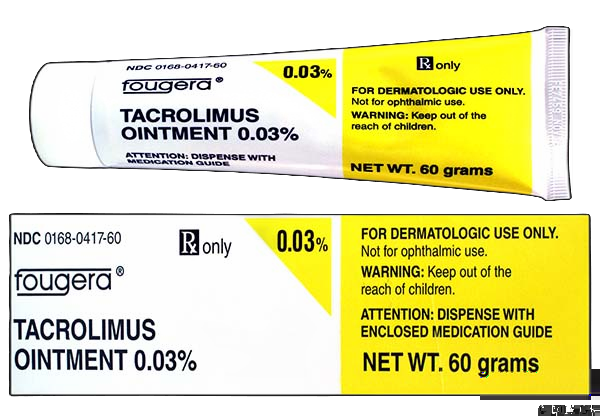
Tacrolimus 0.03%

Pediatric Use · FDA-approved ages 2–15 · Pediatric

Ointment · Topical

Available now

Included in your child’s plan if prescribed · Rx required

You won’t be charged until a clinician reviews and approves your child’s case.

Start your child’s assessment →

Not sure this is right? Take the quiz →

Tacrolimus 0.03% ointment tube

Why is Tacrolimus 0.03% included?

Tacrolimus 0.03% ointment is FDA-approved for atopic dermatitis in patients aged 2 to 15, the only non-steroidal prescription topical indicated specifically for the pediatric age group. Its inclusion in the pediatric formulary addresses the most persistent clinical challenge in childhood eczema: the face.

Facial eczema is both the most visible and the most emotionally difficult aspect of eczema in children. It's also where topical steroids present the most difficult trade-off, effective in the short term, but not appropriate for long-term daily use due to skin thinning risk, particularly around the eyes in growing children whose facial skin and orbital structures are still developing. The answer to this problem isn't more steroid courses with breaks in between indefinitely; it's a fundamentally different mechanism.

Tacrolimus doesn't bind glucocorticoid receptors. It doesn't affect collagen or elastin synthesis. It causes zero skin thinning regardless of how long it's used. For a child who will have eczema for years and needs sustained management of facial involvement, this is not a minor distinction, it's the difference between a tool with a use limit and one that can be part of long-term disease control without structural cost.

The 0.03% concentration is specifically the FDA-approved pediatric dose. The 0.1% adult concentration is not approved for children under 16. At 0.03%, the anti-inflammatory effect is meaningful (particularly on the face, where thinner stratum corneum provides better drug penetration) while the systemic exposure remains well within the bounds established in pediatric trials.

How does it work?

Tacrolimus inhibits calcineurin, an enzyme inside T-cells (the immune cells driving eczema inflammation) that is required to activate NFAT (a transcription factor that T-cells need to produce inflammatory cytokines including IL-2, IL-4, IL-5, and IFN-γ. Without NFAT activation, the T-cell-driven inflammatory cascade that sustains eczema cannot amplify. The skin still has immune function) it can still respond to infections, but the hypersensitive, hyperreactive immune response that constitutes eczema is suppressed at its source.

This mechanism is completely independent of the glucocorticoid receptor pathway. Because tacrolimus doesn't touch glucocorticoid signaling, it has no effect on the structural protein metabolism (collagen, elastin) or adrenal cortisol production that cause side effects with topical steroids. The skin treated with tacrolimus looks and behaves structurally the same after months or years of use as it did before treatment began.

How strong is the evidence?

Tacrolimus 0.03% ointment received FDA approval for pediatric atopic dermatitis following dedicated phase III RCTs in children aged 2–15. The pivotal trials demonstrated significantly greater reduction in EASI (eczema severity) scores compared to vehicle, comparable efficacy to mild-to-moderate potency topical steroids for facial eczema, and crucially, no skin atrophy on histological examination with up to 12 months of use.

Long-term safety studies specifically in children confirm no cumulative skin structural changes, no HPA axis suppression, and no growth effects with tacrolimus 0.03% over periods of a year or more. This is the longitudinal data that supports its role as a genuine long-term management tool, not just a short-course alternative to steroids.

What are the limitations and risks?

The main side effect in children is application site burning and stinging, which is often more challenging to manage than in adults simply because a child who experiences discomfort is less likely to cooperate with continued treatment. This stinging is a direct pharmacological effect (TRPV1 receptor activation in skin nerve fibers) that diminishes significantly within the first week of consistent use as those receptors desensitize. It is not a sign of damage. Preparing the child and parent for this in advance, framing it as temporary and expected, dramatically improves continuation through the desensitization period. Some families find applying it at night, after the child is asleep, avoids the reaction entirely for very young children.

There is an FDA black box warning on tacrolimus regarding a theoretical risk of lymphoma and skin cancer with long-term use. This warning is present on both the pediatric (0.03%) and adult (0.1%) formulations. It is important to address this directly: the theoretical risk came from animal studies at doses far exceeding topical application levels, and from case reports in organ transplant patients on systemic immunosuppressants (oral tacrolimus). Multiple large post-marketing epidemiological studies following children who used topical tacrolimus have not found any increased rate of lymphoma or skin cancer compared to matched children with eczema who didn't use it. The FDA has not rescinded the warning because it requires certainty, not just absence of signal, but the evidence as of 2025 does not support the existence of a meaningful real-world risk. Many pediatric dermatologists consider tacrolimus among the safest topical agents available for long-term facial use in children.

Tacrolimus is not appropriate for infected skin. Eczema herpeticum, a serious viral infection caused by herpes simplex spreading across eczematous skin, is a contraindication. If your child has a history of cold sores or recurrent HSV, disclose this to your clinician.

Frequently Asked Questions

Don't stop, but do prepare them and try the application strategies that reduce the initial stinging. Apply to cooler skin (not immediately after a warm bath). Apply it at bedtime when the child may be calmer or already drowsy. Use the smallest effective amount. The stinging diminishes rapidly with continued use, most children who make it through the first 3–5 days find subsequent applications much less uncomfortable. The stinging is not harmful; it's the TRPV1 receptor being activated by tacrolimus. Once those receptors desensitize, the sensation largely resolves.

You should know about it and ask your clinician about it. The honest summary: the warning was required by the FDA based on theoretical mechanistic concern and animal data, and it has not been confirmed by post-marketing studies tracking children who actually used topical tacrolimus. The studies that have looked for the signal, including large registry analyses, have not found an elevated cancer incidence. The AAD has published position statements noting that the evidence does not support the existence of a meaningful cancer risk from topical use. Your clinician can walk through this with you if you want more detail.

Yes: the FDA approval starts at age 2. Below age 2, the prescribing information does not include tacrolimus 0.03%, and most clinicians stick within the approved age range for a medication with a black box warning. If your child is under 2 and has significant eczema, low-potency steroids are the current standard approach while they reach the approved age for calcineurin inhibitor use.

Twice daily for active flares; once daily or twice weekly for maintenance once the skin has cleared. The maintenance approach (applying to historically affected skin twice weekly even when clear) has solid evidence in adults and is used in children as well, particularly for chronic facial involvement. Your clinician will specify the frequency based on your child's disease pattern.

Yes, and combination strategies are common. A typical approach for a child with both facial and body eczema: mid-potency steroid for body flares, tacrolimus 0.03% for facial management. You can apply both in the same overall management plan; just don't apply them to the exact same skin at the exact same time without specific instruction. Transitioning from steroid to tacrolimus once acute inflammation is controlled on any given site is another effective strategy.

Many children's eczema severity decreases as they age, particularly those who develop it in infancy or early toddlerhood. Tacrolimus is a tool for the period when active management is needed, it doesn't alter the underlying disease course. Periodic reassessment is appropriate: if your child has been well-controlled for 6–12 months, you can try tapering to see if the disease activity warrants continued treatment. Some children outgrow the need for it; others need it through adolescence.

Ready to get a personalized treatment plan for your child?

Fern clinicians review every case individually. Most families hear back in under 3 hours.

Start your free assessment →
Dr. Chethana Gottam, M.D., Board Certified Dermatologist

“There’s a specific look I recognize in eczema patients who’ve been managing on their own too long. They’ve stopped believing it can get better. Fern shortens that window of suffering. It gets people into real treatment before hopelessness sets in.”

Dr. Chethana Gottam, M.D.
Board Certified Dermatologist