Treatments / Ointment

Tacrolimus 0.03%

Ointment · Topical

The lower-concentration formulation of tacrolimus, same non-steroidal mechanism, no skin thinning risk, used when sensitive areas or a gentler starting point are the clinical priority.

Available now

Included in your plan if prescribed · Rx required

You won’t be charged until a clinician reviews and approves your case.

Start your assessment →

Not sure this is right for you? Take the quiz →

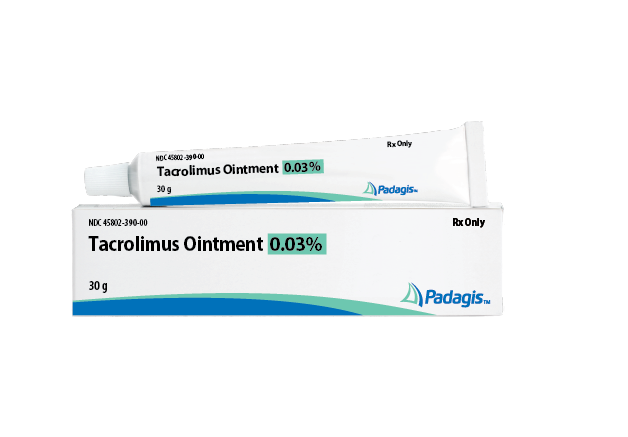
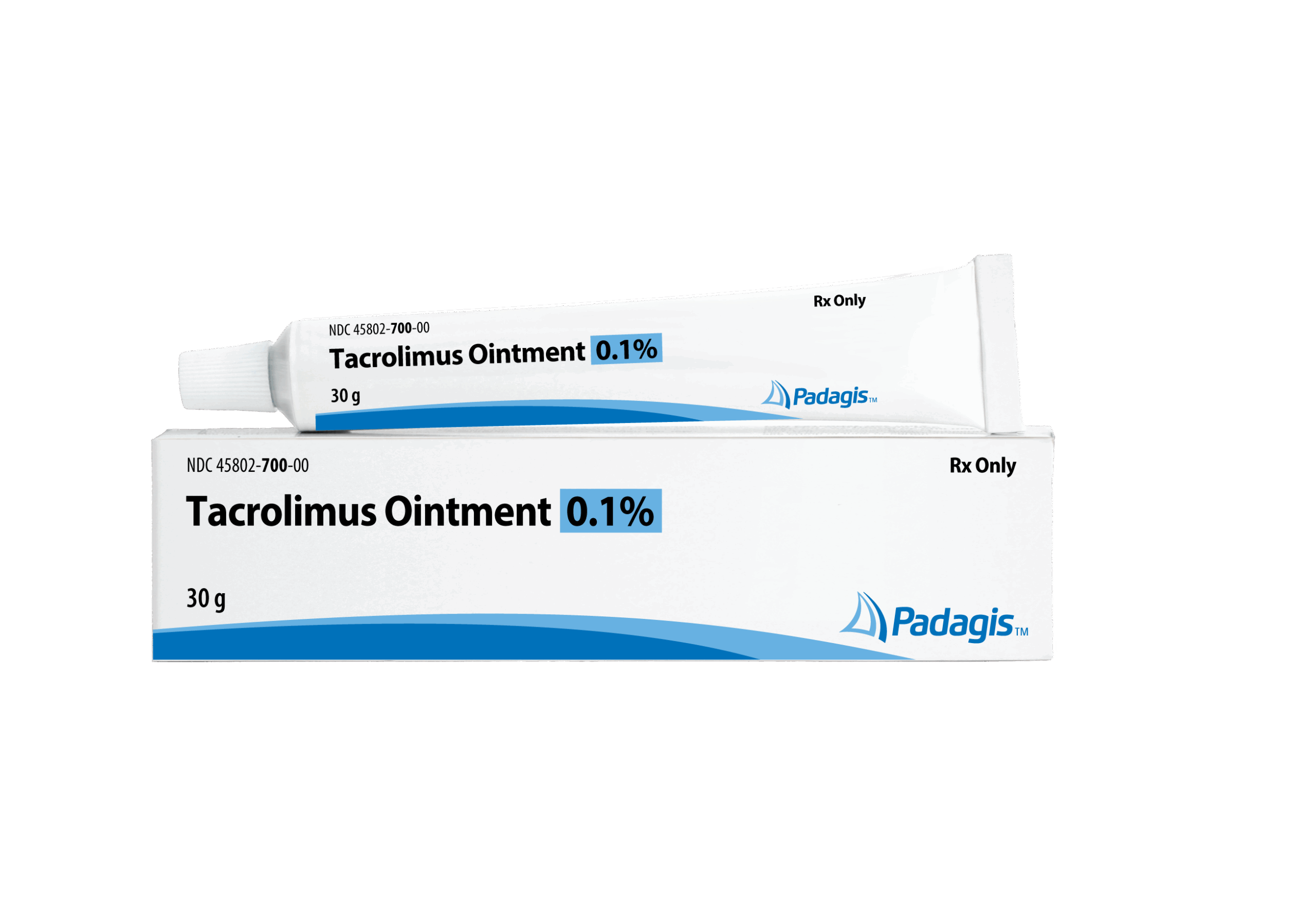
Tacrolimus 0.03% ointment tube

Why is Tacrolimus 0.03% included?

Tacrolimus 0.03% is FDA-approved for atopic dermatitis in patients aged 2 and older (versus 0.1%, which is approved only for adults 16+). In adult Fern patients, 0.03% is typically chosen over 0.1% in two specific situations: when treating very sensitive or thin-skinned areas where even the absence of atrophy risk doesn't justify the stronger concentration, and when a clinician wants to start at a lower dose in a patient who is new to calcineurin inhibitors, particularly if their skin is significantly compromised.

The mechanism, the lack of atrophy risk, and the theoretical considerations about the black box warning are identical to tacrolimus 0.1%. The difference is potency, 0.03% produces measurable but lower levels of T-cell suppression per unit area. For mild-to-moderate eczema on the face and flexural areas, it is often sufficient, while 0.1% is usually needed for moderate-to-severe presentations or in body areas where the molecule needs to work harder.

Some clinicians also use 0.03% as a maintenance option after 0.1% has achieved initial clearance, the lower concentration is enough to maintain remission once the active inflammation has been resolved by the higher concentration.

How does it work?

Identical mechanism to tacrolimus 0.1%: calcineurin inhibition → NFAT inactivation → reduced T-cell cytokine production (IL-2, IL-4, IL-5, IFN-γ). The difference is entirely quantitative, lower concentration means less molecule delivered per application, which means less calcineurin inhibition and a milder but still meaningful anti-inflammatory effect. For the face, eyelids, and neck, this level of inhibition is often sufficient because these areas have better drug penetration (thinner stratum corneum) than the trunk or extremities.

The burning/stinging side effect is still present but typically milder than with 0.1%, as the TRPV1-mediated nociceptive effect also scales with concentration.

How strong is the evidence?

Tacrolimus 0.03% has its own set of RCTs, separate from the 0.1% trials, confirming efficacy for mild-to-moderate atopic dermatitis. It consistently outperforms vehicle. Head-to-head trials against 0.1% consistently show the higher concentration produces faster and more complete clearance in adults, but 0.03% still produces clinically meaningful responses, particularly for facial eczema where penetration compensates for lower concentration. It's in international guidelines as an appropriate option for sensitive skin areas and mild-to-moderate adult AD.

The long-term safety data, the absence of atrophy, applies equally to 0.03%. The black box warning, and the same reassuring epidemiological context, also applies equally.

What are the limitations and risks?

The limitations of 0.03% in adults are primarily about potency adequacy. For moderate-to-severe eczema on the body, 0.03% is unlikely to be sufficient. For established, active, thick plaque disease on the trunk, this is the wrong tool, mid-potency steroids or tacrolimus 0.1% are more appropriate. If you're prescribed 0.03% and not seeing adequate improvement within 2 weeks, this is the most likely explanation, and your clinician can step up to 0.1%.

The same considerations about eczema herpeticum and bacterial infections that apply to 0.1% apply here. Do not use on actively infected skin. Disclose any history of recurrent herpes simplex (cold sores) to your clinician before starting, as this affects prescribing approach.

Frequently Asked Questions

Same molecule, lower concentration. In practice: 0.03% is typically used for milder presentations, sensitive areas, or as a starting dose; 0.1% is used for moderate-to-severe adult AD. If you're not getting adequate control with 0.03%, escalating to 0.1% is the straightforward next step.

Generally yes, the stinging effect scales with concentration. If the 0.1% application site burning was the main reason you stopped using tacrolimus in the past, 0.03% is worth trying. Many patients who couldn't tolerate 0.1% tolerate 0.03% well enough to establish the desensitization period, after which the 0.1% can sometimes be re-introduced.

Yes, and this is a common clinical approach. Using a low-potency topical steroid to rapidly reduce acute inflammation, then transitioning to or adding tacrolimus 0.03% for maintenance, takes advantage of both mechanisms. Some clinicians also use them in a "sequential" approach on different areas simultaneously, steroids on body sites, tacrolimus on facial or flexural sites.

Yes: this is one of the primary reasons tacrolimus is prescribed. If you want to reduce your dependence on topical steroids for facial or flexural eczema, tacrolimus 0.03% or 0.1% is specifically the tool for this. The goal is to use steroids for acute clearance and calcineurin inhibitors for maintenance, which reduces total steroid exposure meaningfully.

Report this at your follow-up. The most common next steps are switching to tacrolimus 0.1% if the affected areas are appropriate for the higher concentration, adding a topical steroid for acute exacerbations, or evaluating whether the areas involved are appropriate for calcineurin inhibitor treatment at all (body sites beyond the face and folds often need steroids). It doesn't mean tacrolimus isn't right for you, it may just be a concentration question.

Not meaningfully. Once-daily or twice-weekly maintenance use of 0.03% is studied and appropriate. The same absence of tachyphylaxis applies, unlike steroids, calcineurin inhibitors don't lose efficacy with continuous use. For some patients, using 0.03% twice weekly to maintain remission achieved by 0.1% acute treatment is the intended long-term plan.

Ready to get a personalized treatment plan?

Fern clinicians review every case individually. Most patients hear back in under 3 hours.

Start your free assessment →
Dr. Chethana Gottam, M.D., Board Certified Dermatologist

“There’s a specific look I recognize in eczema patients who’ve been managing on their own too long. They’ve stopped believing it can get better. Fern shortens that window of suffering. It gets people into real treatment before hopelessness sets in.”

Dr. Chethana Gottam, M.D.
Board Certified Dermatologist