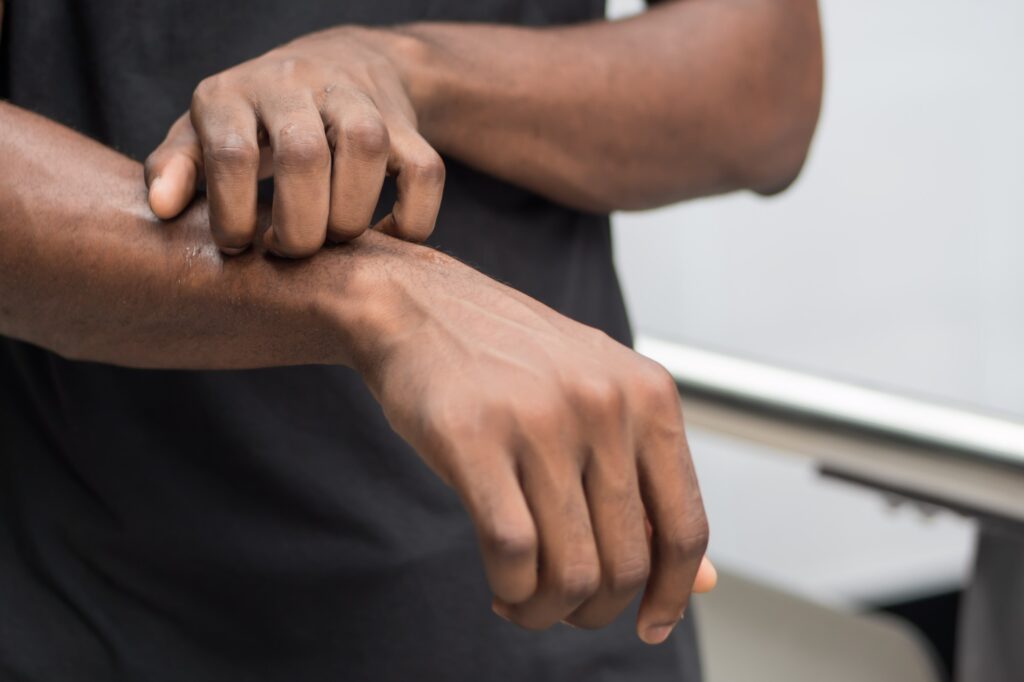
Your hands crack. They peel. They itch so badly you want to rip your skin off. And no amount of lotion seems to fix it.
Hand eczema is one of the most stubborn, frustrating forms of atopic dermatitis — and it’s incredibly common. Your hands are exposed to more irritants in a single day than the rest of your body sees in a week. That makes them uniquely difficult to treat and uniquely easy to re-trigger.
But “difficult” doesn’t mean “impossible.” Here’s what’s driving your hand eczema and what actually works to get it under control.
Why hands are eczema’s favorite target
Your hands are in constant contact with the world. Water, soap, cleaning products, hand sanitizer, food, fabrics — every single one of these can strip the skin barrier or trigger an immune response.
For people with atopic dermatitis, the skin barrier on the hands is already compromised. Add in the sheer volume of daily exposures, and your hands become a flare factory.
A few specific factors make hand eczema particularly relentless:
Frequent hand washing. Essential for hygiene, terrible for eczema. Water — especially hot water — strips natural oils from the skin. Soap compounds the damage. If you’re washing your hands 10+ times a day (which most of us are), you’re breaking down the barrier faster than it can rebuild.
Occupational exposure. Healthcare workers, food service staff, hairstylists, mechanics, cleaners — anyone who works with their hands in wet or chemical-heavy environments is at significantly higher risk. Occupational hand dermatitis is a well-documented clinical entity, with wet-work occupations carrying the highest risk.
The flex factor. Your hands bend, grip, and stretch constantly. The skin on your knuckles and between your fingers is thinner and under more mechanical stress, making it crack more easily and heal more slowly.
How to tell if it’s eczema or something else
Hand eczema can look like a few other conditions, and misidentifying it leads to wrong treatments and wasted time.
Contact dermatitis looks similar but is caused by a specific allergen or irritant (like nickel, latex, or a particular soap). The key difference: contact dermatitis often has a clear pattern tied to exposure, while atopic hand eczema tends to be more diffuse and chronic.
Psoriasis can affect the hands too, but typically presents with thicker, more well-defined plaques and may involve the nails.
Fungal infections can mimic eczema, especially between the fingers. If your hand “eczema” only affects one hand, or appeared suddenly, it’s worth ruling out a fungal cause.
If you’re not sure, a clinician can usually distinguish these based on your history, symptom pattern, and photos of the affected areas.
What actually works for hand eczema
Protect the barrier aggressively. This means a heavy-duty, fragrance-free ointment or cream (not lotion — lotions are too thin) applied after every hand wash and before bed. Petroleum jelly, CeraVe Healing Ointment, or Aquaphor are solid choices. Yes, it feels greasy. That’s the point.
Wear gloves strategically. Cotton-lined rubber gloves for dish washing, cleaning, and wet work. Cotton gloves under work gloves for mechanical tasks. Some people sleep in cotton gloves over a layer of ointment (called “soak and seal”) to accelerate overnight healing.
Dial down the hand washing. Where possible, swap soap-and-water for a gentle, fragrance-free hand sanitizer (alcohol-based is fine — it’s actually less drying than soap for many people). When you do wash, use lukewarm water and a mild cleanser.
Use the right prescription. Over-the-counter hydrocortisone (1%) is usually too weak for hand eczema. The skin on your palms is thick, and low-potency steroids can’t penetrate effectively. Most clinicians prescribe a mid-to-high potency topical corticosteroid (like clobetasol or betamethasone) for flares, with tacrolimus as a steroid-sparing option for maintenance on thinner areas like the backs of the hands.
Treat the flare AND maintain. Clearing a flare is step one. Keeping it clear requires ongoing barrier care and, often, a maintenance prescription applied a few times per week to the hands specifically.
When OTC isn’t cutting it
If you’ve been cycling through drugstore creams and your hands still look like they’ve been through a paper shredder, it’s time for prescription-strength treatment. Hand eczema responds well to targeted therapy — but you need the right medications at the right potency, and that requires a clinical evaluation.
The traditional route means waiting weeks (or months) for a dermatologist appointment. That’s a long time to live with cracked, bleeding hands.