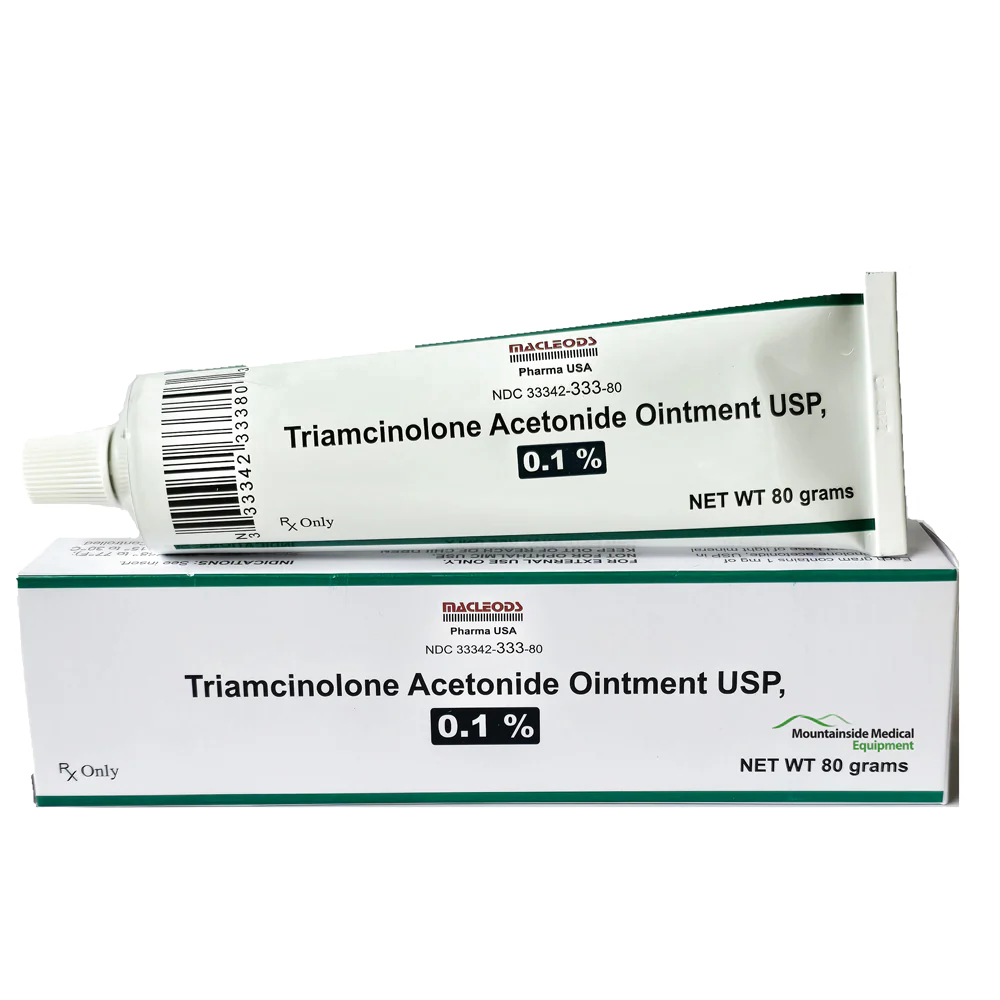
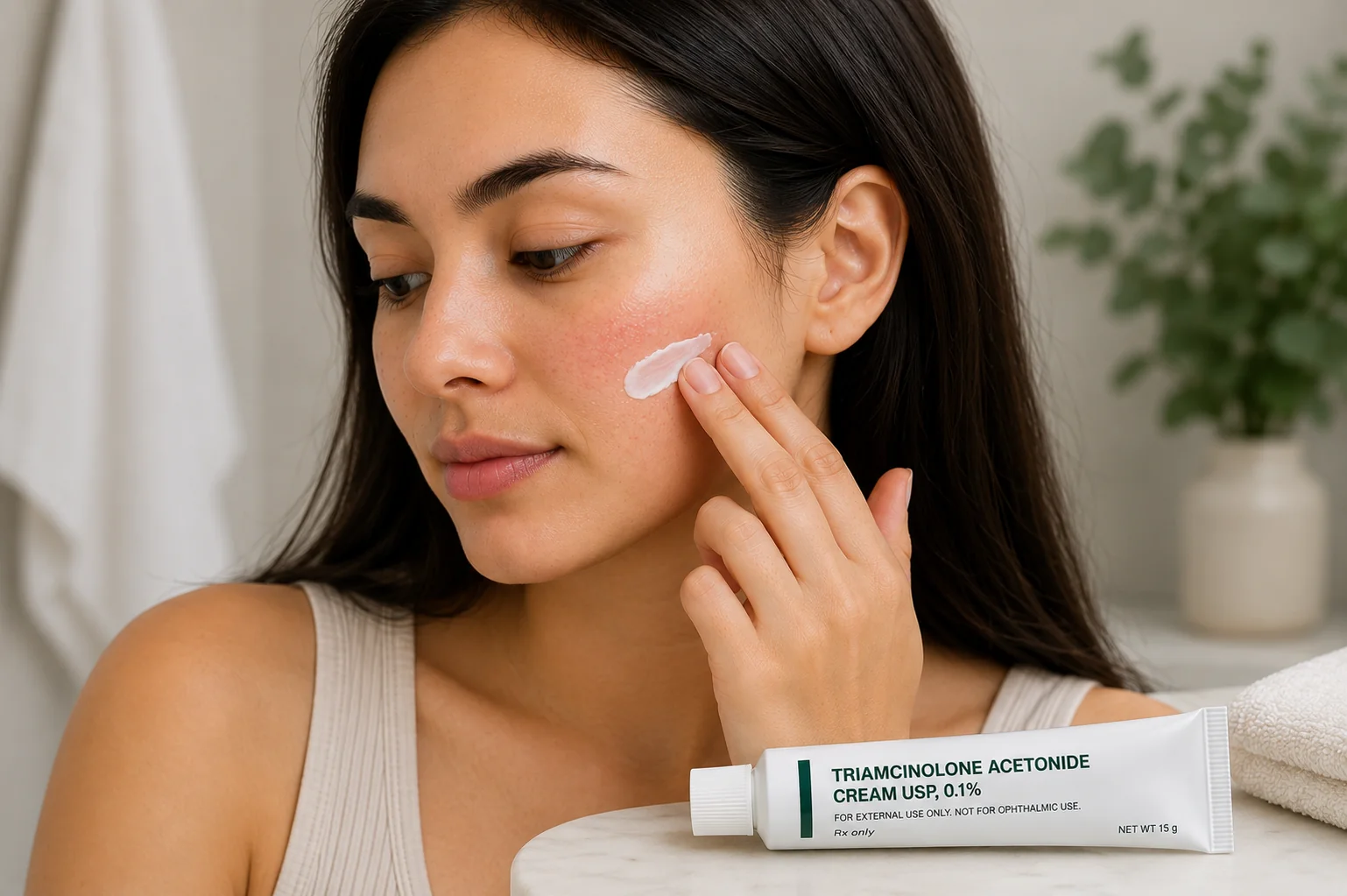
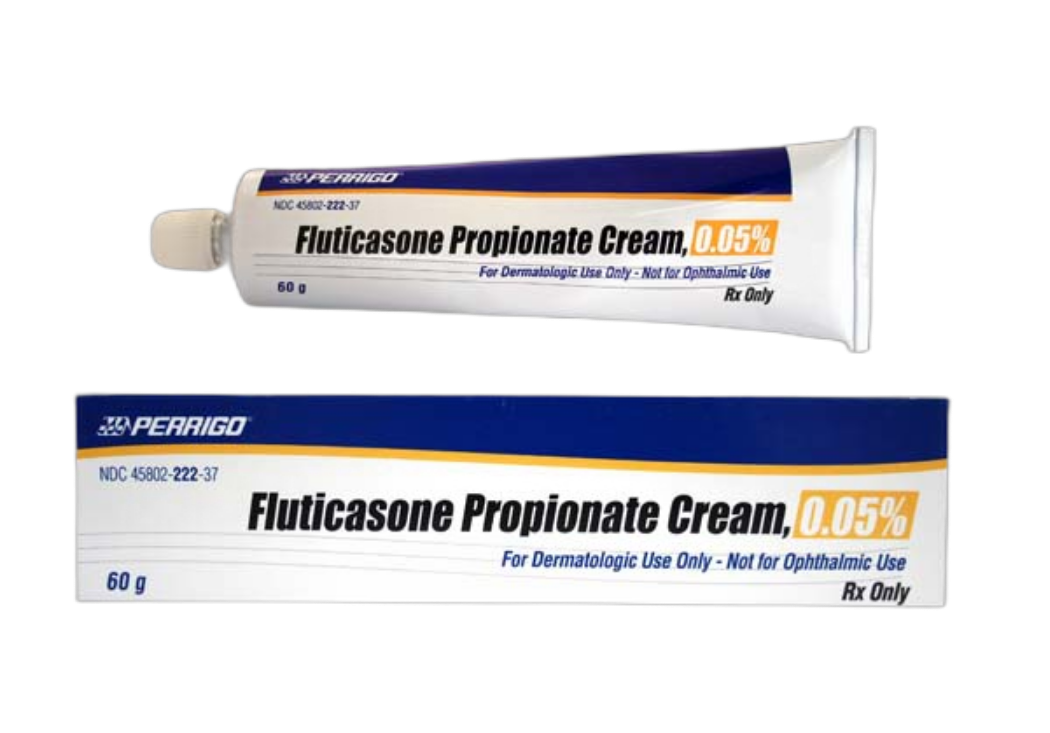
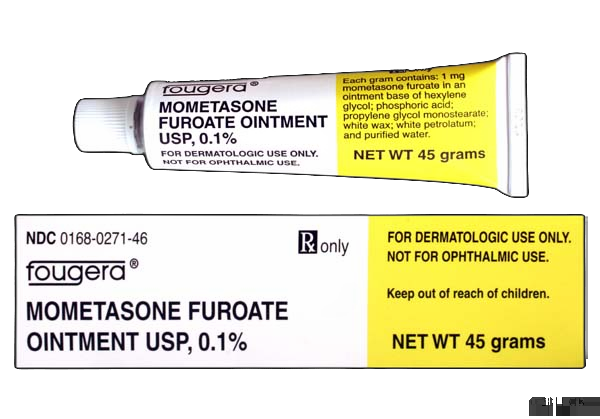
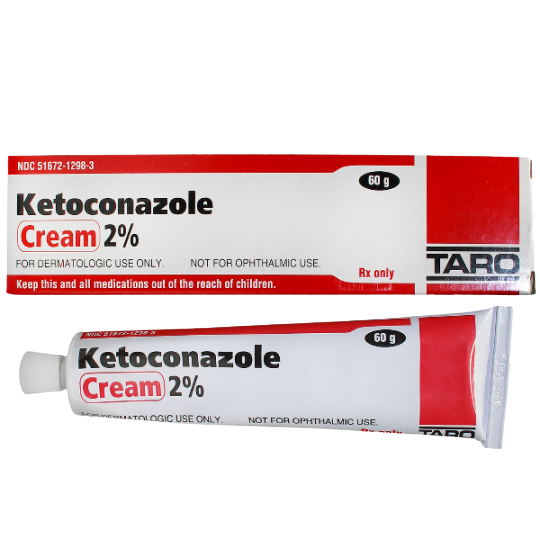
Triamcinolone acetonide 0.1% is a mid-potency fluorinated prescription steroid used in children from around age 2 for moderate eczema on the body. It’s the most prescribed topical steroid in the United States across all age groups, and its use in children for trunk and extremity involvement is well-established in pediatric dermatology.
Childhood eczema frequently involves the trunk, arms, legs, and the antecubital and popliteal fossae (inside elbows and behind knees). Low-potency steroids routinely can’t clear established flares at these sites; triamcinolone can — but only on those areas, never on the face, neck, or skin folds.
Triamcinolone is a fluorinated glucocorticoid — the fluorine atom increases receptor affinity and skin penetration compared with non-fluorinated compounds. That matters on the body, where the thicker stratum corneum needs more drug penetration to reach the inflammatory cells in the dermis. Once bound, it suppresses the NF-κB-driven cytokine cascade behind eczema inflammation.
The cream formulation penetrates well for the relatively moist, often weeping flares typical of pediatric body eczema. Twice-daily application maintains therapeutic drug concentrations in the skin throughout the day.
Triamcinolone 0.1% has extensive pediatric evidence as part of the broader topical corticosteroid literature, supplemented by direct pediatric trials. It appears in AAD, EADV, and BAD pediatric eczema guidelines as a standard mid-potency agent for body-site involvement. Multiple pediatric RCTs confirm its superiority over low-potency agents for moderate-to-severe eczema on the trunk and extremities.
The proactive twice-weekly maintenance strategy — applying to previously affected skin even when clear to prevent recurrence — has pediatric-specific evidence supporting its use in children with recurring body-site eczema.
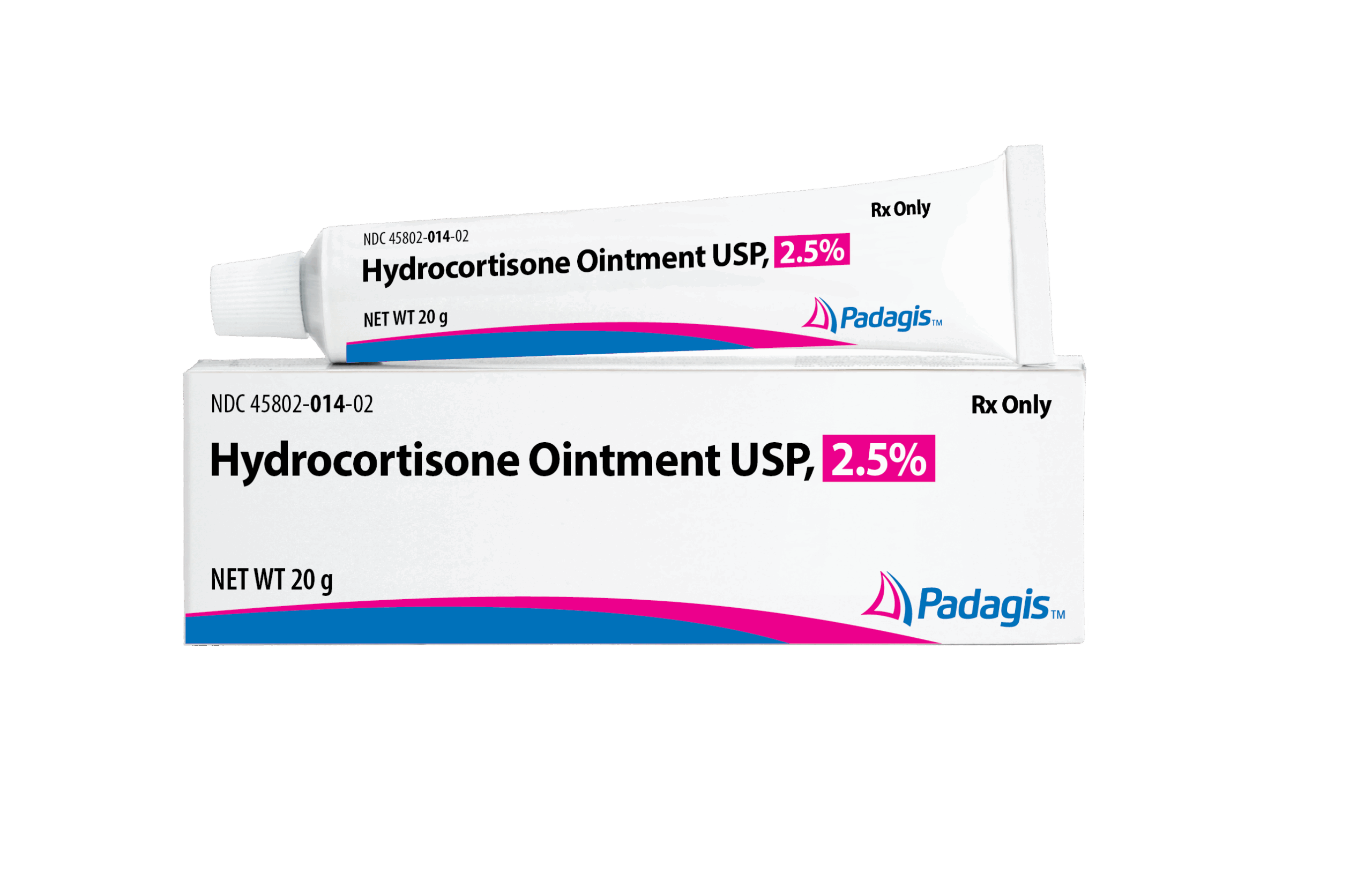
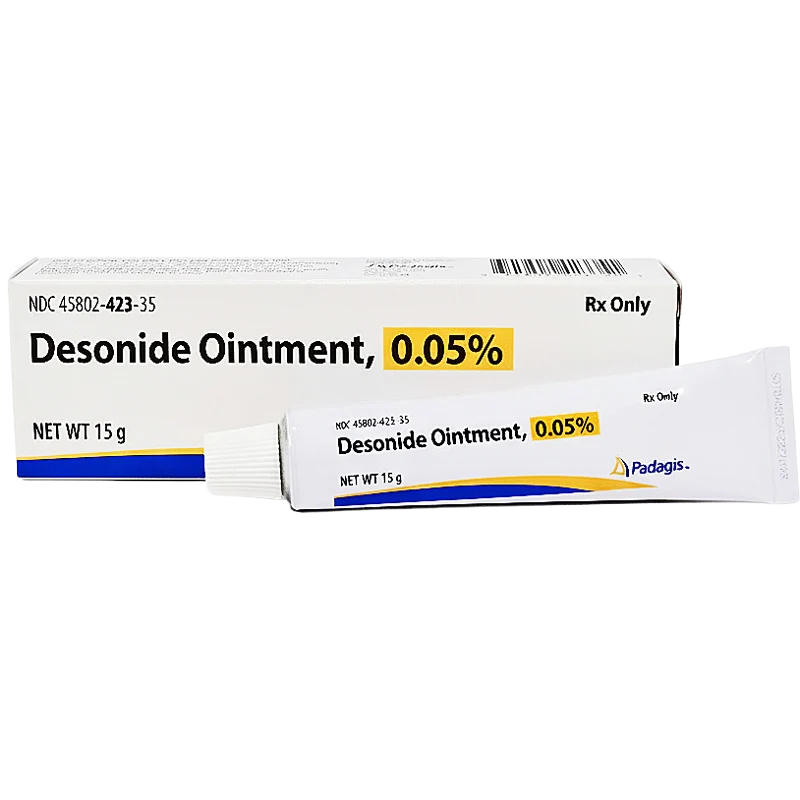
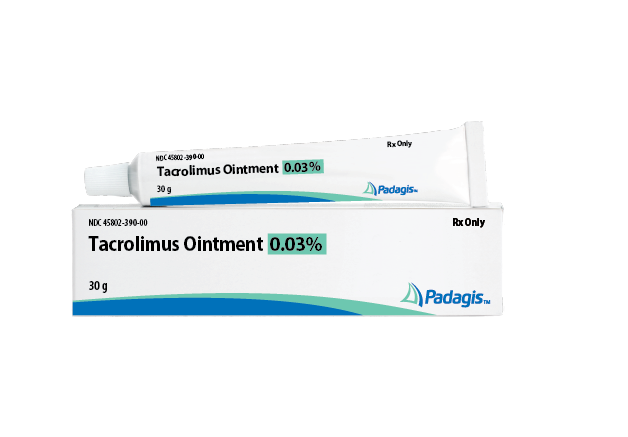
Not for the face, neck, eyelids, or skin folds at any age. This is the most important restriction for parents to internalize. Children’s eczema frequently involves the face alongside body sites, and it’s tempting to use whatever works on all affected areas — but triamcinolone on a child’s face creates real atrophy risk. Use hydrocortisone 2.5% or desonide for facial involvement, and tacrolimus 0.03% for long-term facial maintenance.
Children’s higher surface-area-to-body-weight ratio means applying triamcinolone over a large percentage of a young child’s body carries a more meaningful systemic absorption risk than the same coverage in an adult. Short courses (7–14 days) on appropriate body sites have a well-established safety record. Extended use, large coverage areas, and occlusive clothing or bandages all increase risk. Your clinician should know the extent of your child’s involvement when prescribing.