After day 3, it was completely clear
“After day 3, it was completely clear. Miracle drug!”
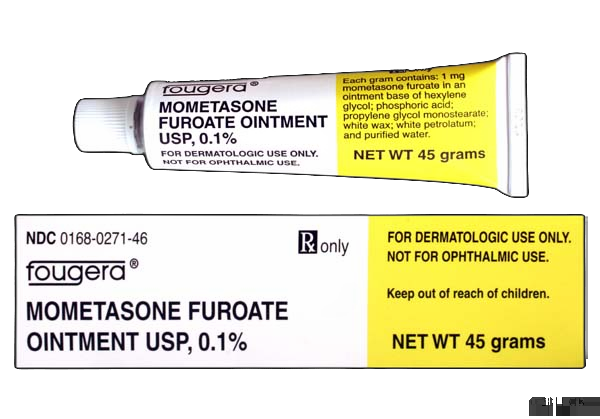

*Packaging may vary based on availability.
Generic for Elocon · Mid-potency cream/ointment · 45g
Mometasone furoate 0.1% is a mid-potency prescription steroid with one clinically important feature that sets it apart from other mid-range agents: it’s dosed once daily rather than twice. That difference matters because adherence is one of the biggest determinants of whether an eczema course actually works, and a once-a-day regimen is dramatically easier to keep up with over a full 1–2 week course.
Within the mid-potency class, mometasone sits toward the stronger end — some ranking systems classify it as Class IV (mid-high) rather than Class V. It’s a fluorinated compound with high receptor affinity, and it produces rapid, reliable clearance of moderate flares on the trunk and extremities. Both cream and ointment are available on one Rx: cream for acute weeping flares, ointment for dry, thickened, or lichenified patches.
Mometasone binds glucocorticoid receptors with high affinity and suppresses the NF-κB-driven cytokine cascade that sustains eczema inflammation. Its once-daily efficacy is explained by its skin pharmacokinetics: it has a long residence time in the epidermis and dermis, maintaining anti-inflammatory activity for roughly 24 hours after a single application — unlike some other mid-potency agents where receptor-active concentrations fall below therapeutic levels sooner.
The ointment formulation is more occlusive than the cream, which increases penetration and effective potency per application. That makes ointment the right vehicle for thicker, more treatment-resistant patches, while cream is the default starting vehicle for acute, inflamed skin.
Mometasone furoate 0.1% has extensive RCT evidence for atopic dermatitis in both adults and children. Multiple trials confirm once-daily mometasone is non-inferior to twice-daily regimens of comparable mid-potency agents, directly supporting the simplified dosing recommendation. Cochrane reviews of topical corticosteroids consistently include mometasone as one of the better-evidenced compounds in its class.
It appears in AAD, EADV (European Academy of Dermatology), and British Association of Dermatology guidelines as a standard option for moderate atopic dermatitis, and there is dedicated pediatric trial data confirming the once-daily dosing recommendation was validated in children rather than extrapolated from adult studies.
Not for the face, neck, groin, underarms, or other skin folds. Mometasone’s position toward the stronger end of the mid-potency range means it carries slightly more atrophy risk than triamcinolone or fluticasone, and thin-skinned areas won’t tolerate it well. Not for skin that’s actively infected — the immunosuppressive effect can let a bacterial or viral infection spread.
Not for continuous, uninterrupted daily use over months. Once-daily dosing is an advantage for adherence, but it can create a false sense that “one application is always fine” — applying a large amount over large surface areas daily for months is still problematic. Tell your clinician if you have a history of Cushing’s syndrome, diabetes, or elevated intracranial pressure before starting.
“After day 3, it was completely clear. Miracle drug!”

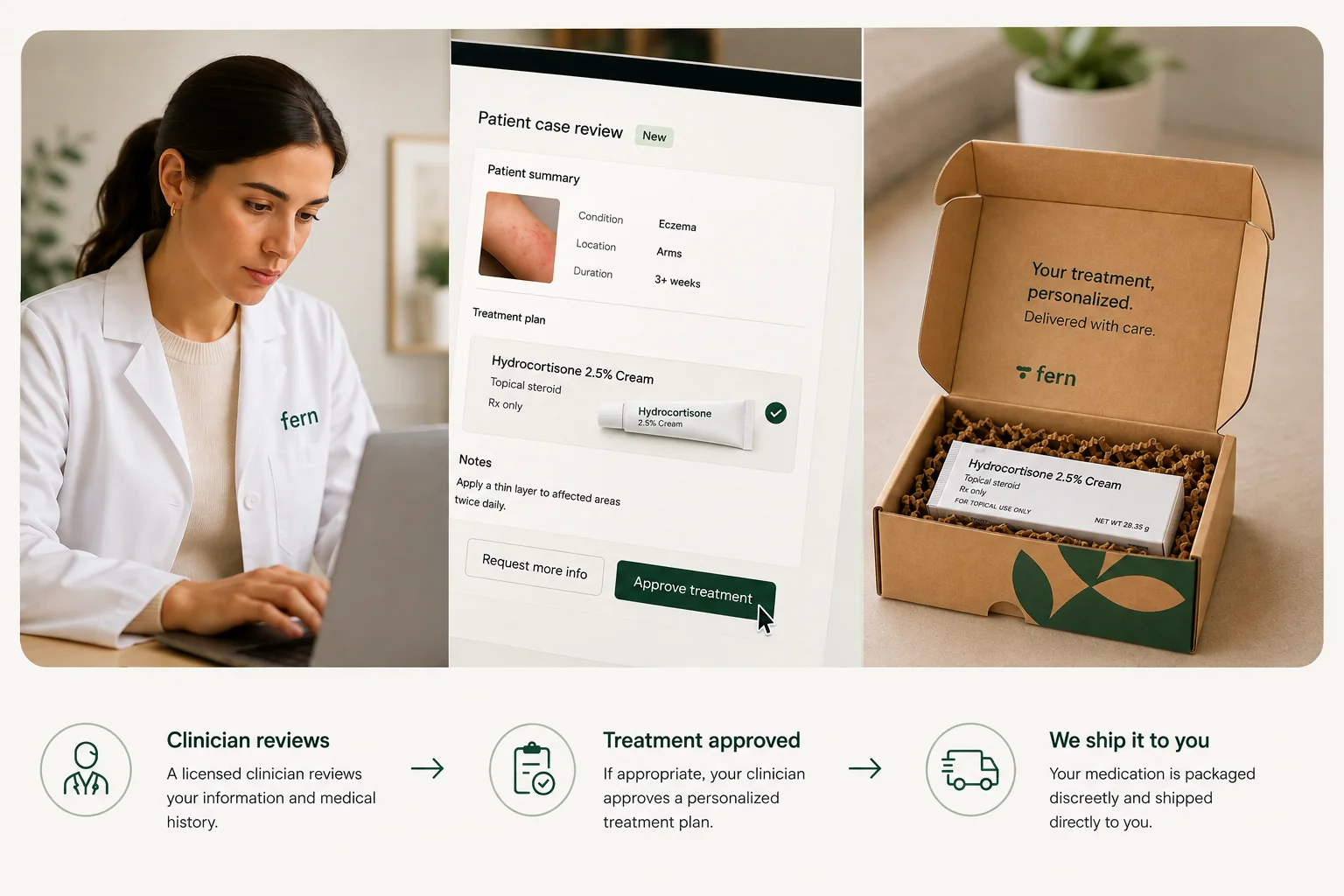
| Traditional | With Fern | |
|---|---|---|
| Doctor appointment | ~30 days to book | 5-hour clinician review |
| Getting the Rx | Separate pharmacy trip | Shipped to your door |
| Cost | Insurance + copays | $35/mo, no insurance |
| Follow-up | Second appointment | Message the care team |
Mometasone’s receptor binding and skin retention allow therapeutic concentrations to persist for about 24 hours after a single application. Twice-daily application doesn’t meaningfully increase efficacy and does increase cumulative dose and side-effect risk. Once daily is both sufficient and preferred.
Cream for acute, weeping, or inflamed flares — it absorbs better, feels lighter, and is easier to apply over irritated skin. Ointment for dry, thickened, scaling, or chronic patches where better penetration is needed. If your presentation includes both, your clinician may prescribe one and specify which areas to target, or advise starting with cream and switching if response is incomplete.
Most patients notice reduced itch and redness within 24–48 hours. Full clearance of an active flare typically takes 5–10 days of consistent once-daily application. If nothing changes after a week, that’s a signal to check back in with the care team.
Yes. Twice-weekly proactive maintenance dosing with mometasone has been studied and shows flare-prevention benefits similar to fluticasone maintenance protocols — applied to previously affected areas on two scheduled days per week, even when skin looks clear. Discuss the transition with your clinician; the principle is higher potency to clear, less frequency to maintain.
Mid-potency topical steroids are used during pregnancy when clinically necessary, but clinicians generally prefer the lowest effective potency — hydrocortisone or desonide — when a topical steroid is needed. Disclose pregnancy or breastfeeding status in your intake so your clinician can weigh whether mometasone is the right choice or whether to step down.
Fern clinicians review every case individually. Most patients hear back in under 3 hours.
Start your assessment →This information is for educational purposes only and is not medical advice. Consult with a healthcare provider before starting any treatment.

“There’s a specific look I recognize in eczema patients who’ve been managing on their own too long. They’ve stopped believing it can get better. Fern shortens that window of suffering. It gets people into real treatment before hopelessness sets in.”