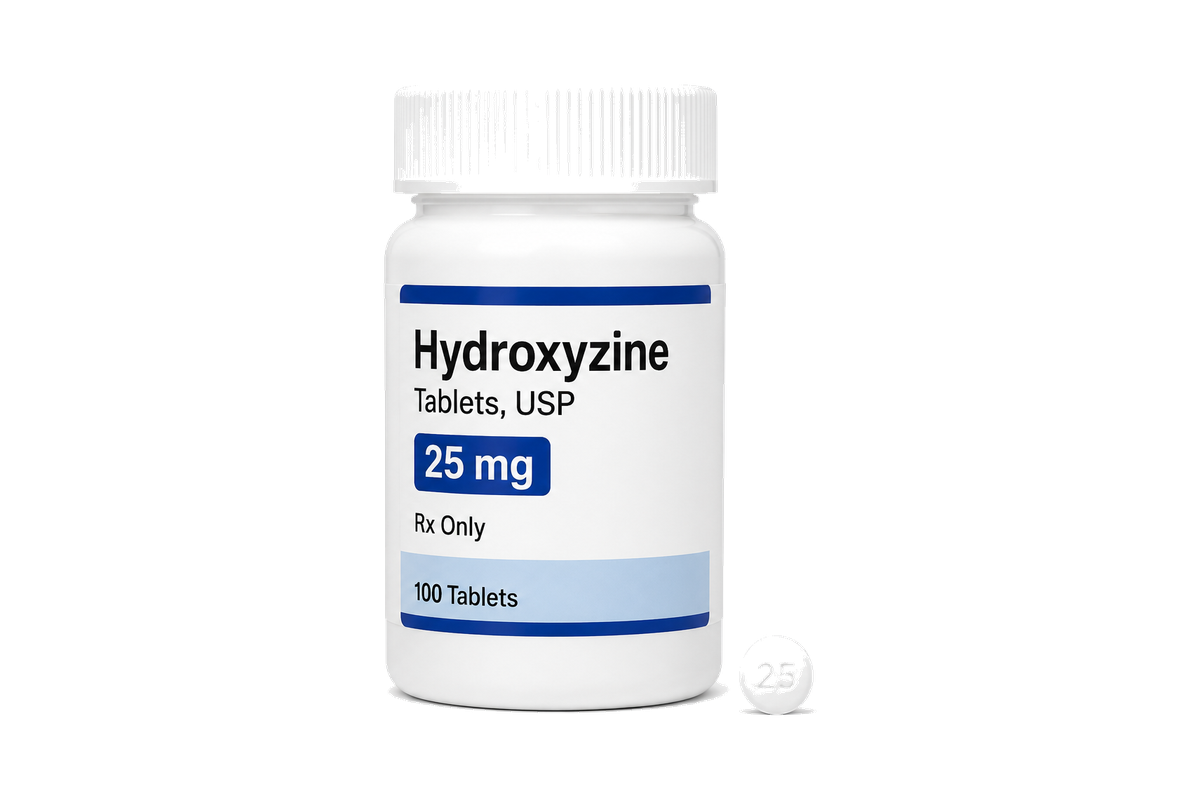
Hydroxyzine is a first-generation antihistamine where the sedation itself is the therapeutic point. It crosses the blood-brain barrier, blocks central H1 receptors, and produces reliable drowsiness that interrupts the overnight itch-scratch cycle that quietly worsens eczema day after day.
Clinicians typically prescribe 25 mg at bedtime as a starting point, with a working range of 25–75 mg depending on weight, response, and tolerability. It is not a first-line eczema treatment on its own — it’s an adjunct to topical anti-inflammatories, aimed squarely at the nighttime scratching that undoes their work.
Hydroxyzine antagonizes H1 histamine receptors both peripherally and centrally. In atopic dermatitis, histamine is not the dominant itch mediator (IL-31 and other Th2 cytokines are), so peripheral H1 blockade has only a modest direct anti-itch effect. The real value is central: blocking brain H1 receptors reduces wakefulness — histamine is a wakefulness-promoting neurotransmitter — and produces the sedation that keeps you from scratching unconsciously through the night.
It also has anticholinergic activity at muscarinic receptors, which deepens the sedation and accounts for dry mouth, urinary hesitancy, and constipation. Onset is 30–60 minutes; sedative effect typically lasts 6–8 hours.
Direct evidence that antihistamines reduce eczema inflammation is weak — Cochrane reviews consistently find they don’t meaningfully change objective severity scores. What the evidence does support is that hydroxyzine’s sedative effect reduces nocturnal scratching and improves sleep quality, and improved sleep quality correlates with better eczema outcomes.
Studies confirm eczema severity is worse in patients with poor sleep, and interventions that improve sleep — including sedating antihistamines — produce measurable reductions in disease burden. Hydroxyzine has decades of clinical use for this exact purpose and a well-characterized safety profile.
Don’t take it before driving, operating machinery, or any task requiring alertness. Plan to dose 30–60 minutes before bed and expect possible morning grogginess in the first days of use. Do not combine with alcohol — the additive CNS depression is real and can impair breathing during sleep.
Older men with benign prostatic hyperplasia should flag it: anticholinergic activity can worsen urinary retention. Disclose any other sedating, anticholinergic, or sleep medications in your intake. Long-term nightly anticholinergic use has been associated with cognitive concerns in older adults in observational studies — short courses during active flares are the typical approach.