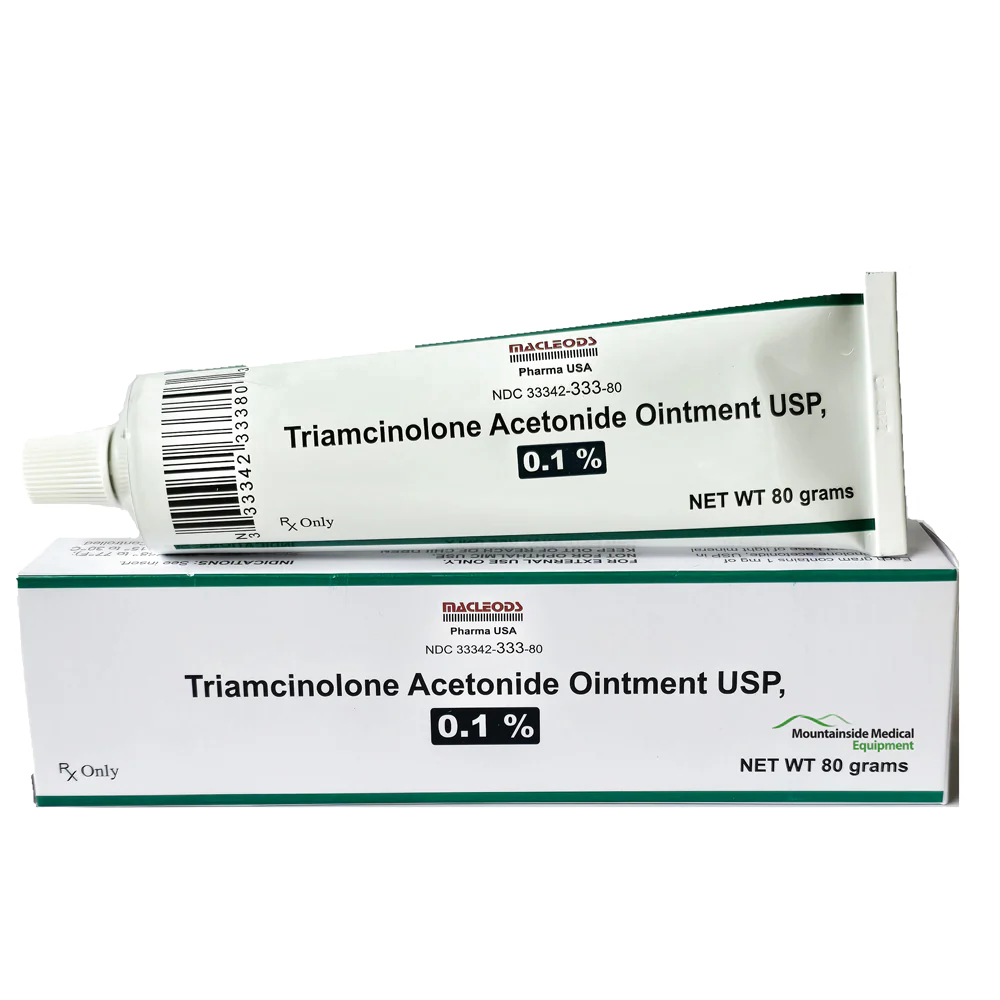
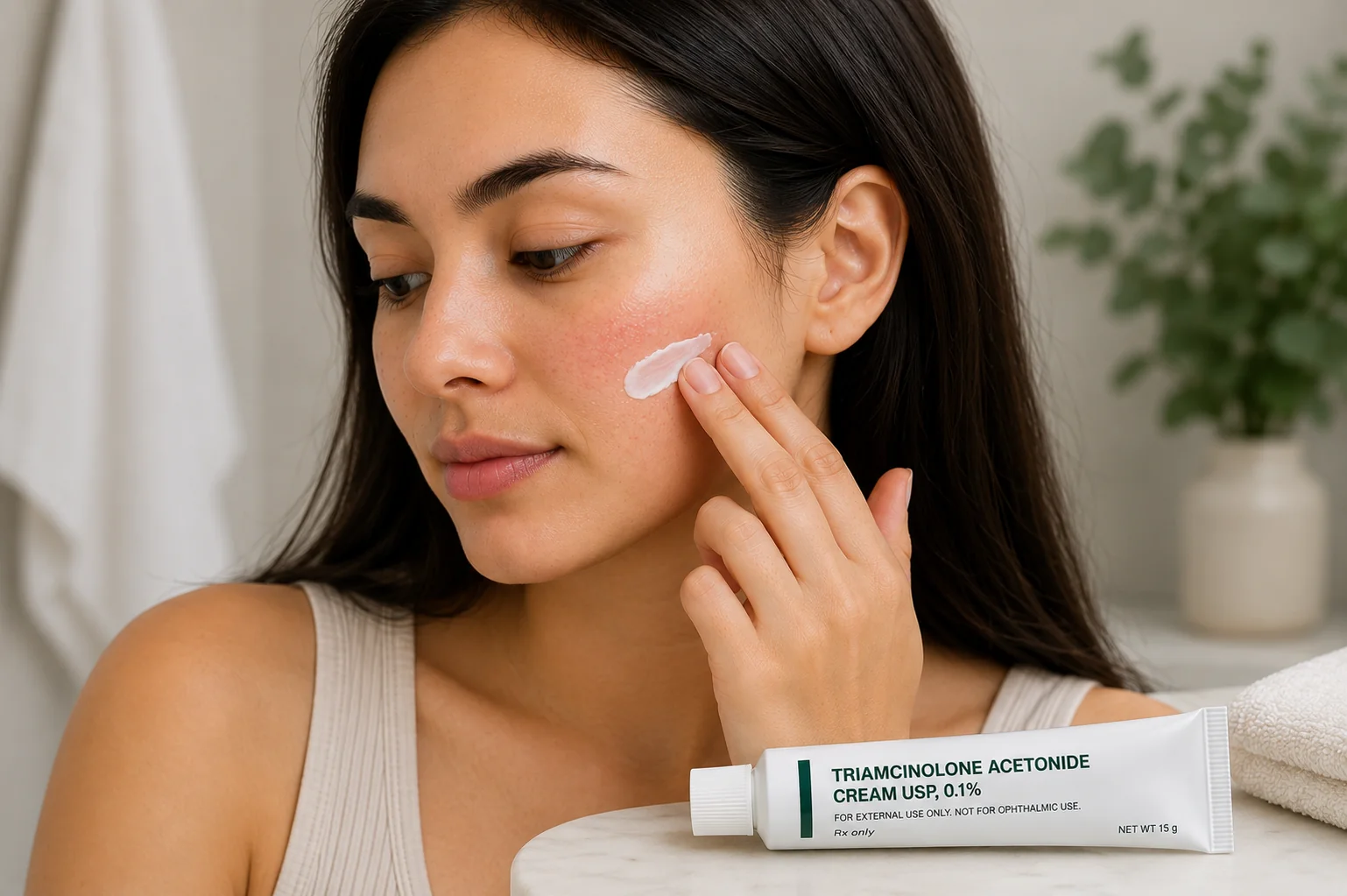
Triamcinolone acetonide 0.1% is a mid-potency fluorinated prescription steroid — the workhorse tier above hydrocortisone and desonide. It’s probably the single most-prescribed topical steroid in the United States, with more than 50 years of dermatology use behind it.
It’s the right tool for moderate eczema on the trunk, arms, and legs, where the skin is thicker and more resilient. Low-potency creams often can’t fully clear established flares at these sites; triamcinolone can.
Triamcinolone is a fluorinated glucocorticoid — the fluorine atom increases both its receptor affinity and its skin penetration compared with non-fluorinated steroids. Once bound in skin cells, it suppresses the NF-κB and AP-1 transcription pathways that drive IL-4, IL-13, IL-31, and TNF-α — the cytokines behind eczema inflammation.
The cream formulation works especially well on acute, weeping, or moist flares. Most patients notice reduced itch and redness within 24–48 hours; a typical body-flare course runs 7–14 days of twice-daily application.
The evidence base for triamcinolone 0.1% in atopic dermatitis is among the largest of any topical steroid. Dozens of RCTs and multiple Cochrane meta-analyses confirm its superiority over vehicle and over low-potency steroids for moderate eczema on the body. It appears in every major international AD guideline as a standard mid-potency option.
Triamcinolone has also been specifically studied in the proactive maintenance model — applying twice weekly to previously affected skin even when it looks clear, to prevent flares from returning. That approach has strong RCT support for reducing flare frequency versus reactive treatment alone.
Not for the face, neck, eyelids, groin, or underarms. The fluorinated mid-potency structure creates real atrophy risk on thin-skinned areas — and prolonged use in skin folds or under tight clothing can cause permanent stretch marks (striae). A common patient error is reaching for triamcinolone on the face when the low-potency tube runs out; that should be avoided.
Skip it on skin that’s actively infected — oozing, crusting, warmth, or pain rather than itch. HPA axis suppression becomes a real consideration when triamcinolone is applied over large body surface areas or under occlusion. If you have Cushing’s syndrome, diabetes or difficulty controlling blood sugar, or a history of elevated intracranial pressure, flag it in your intake so your clinician can factor it in.