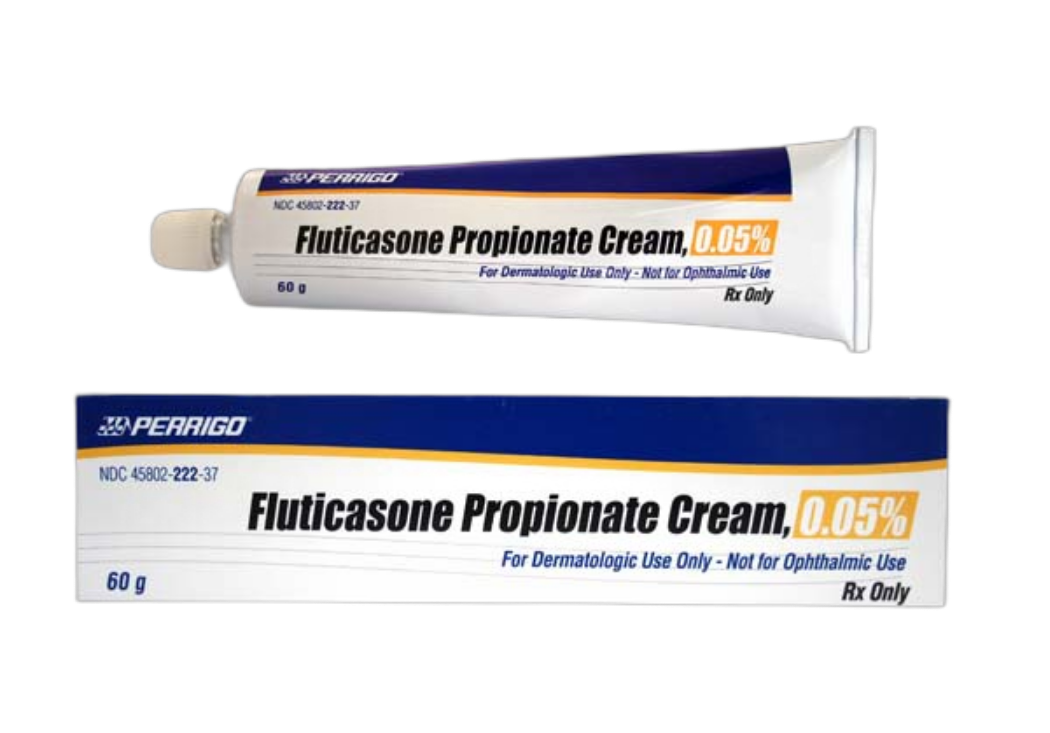
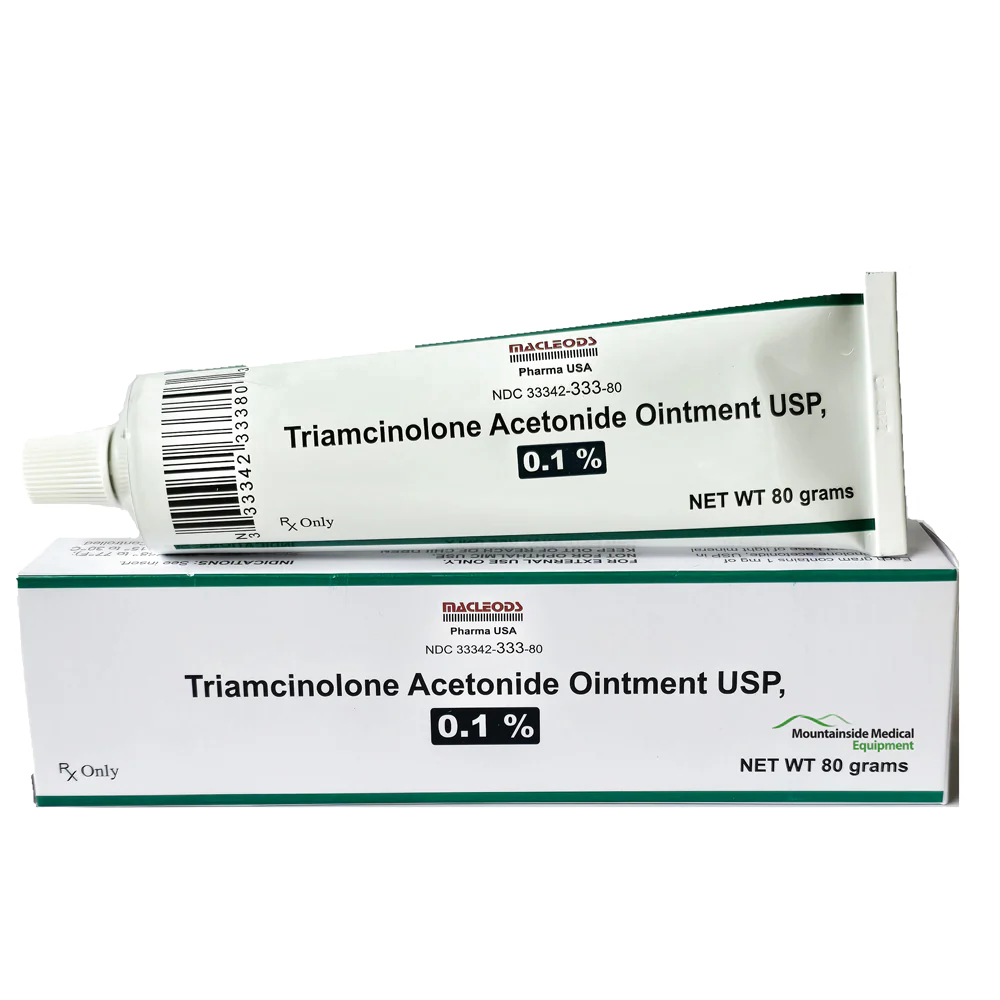
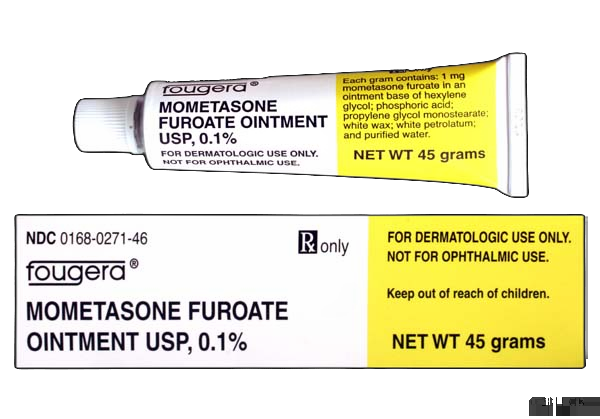
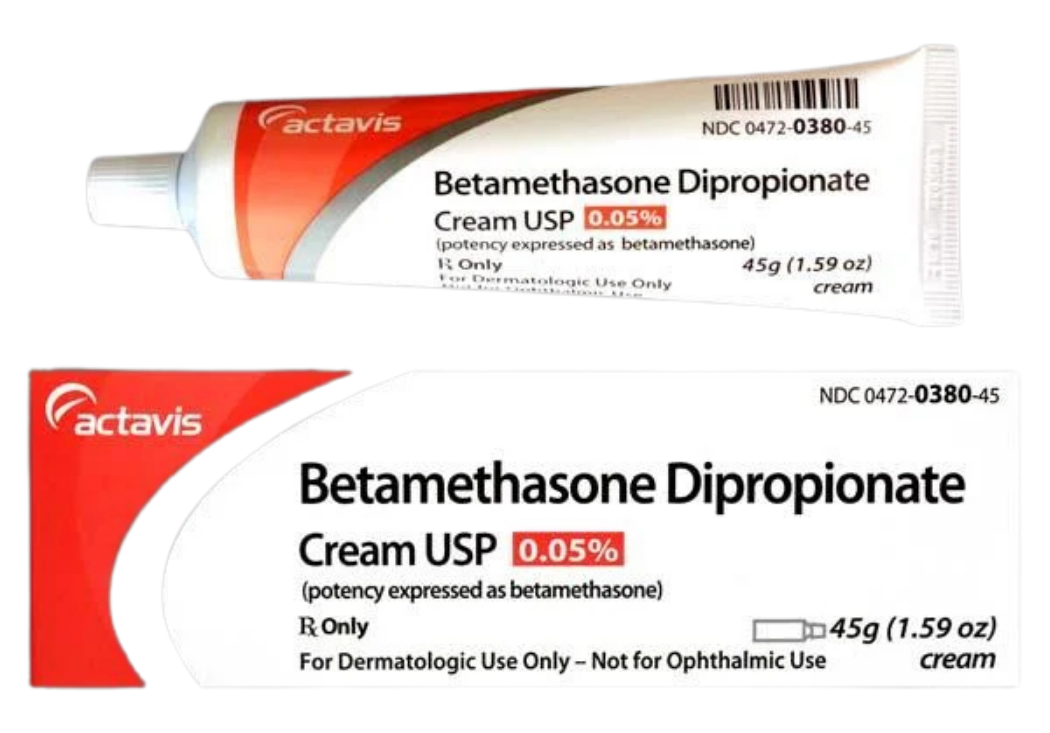
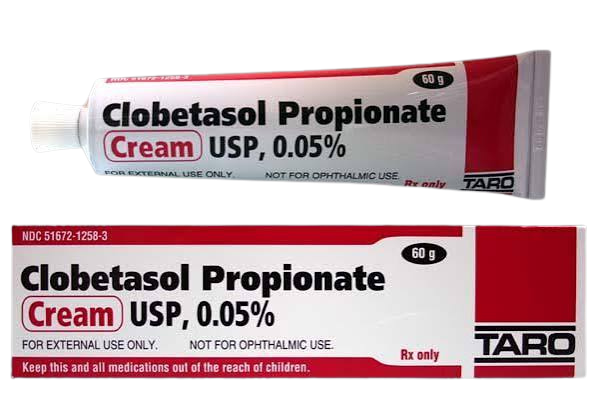
Fluticasone propionate 0.05% cream (originally branded Cutivate) sits in the same mid-potency tier as triamcinolone. What sets it apart clinically is proactive maintenance evidence — it’s among the most extensively studied topical steroids for twice-weekly application to previously affected skin, applied even when the skin currently looks clear, to prevent flares from returning.
For patients with recurring eczema in the same locations, this approach shifts treatment from constant reactive firefighting to actual long-term control.
Fluticasone binds glucocorticoid receptors in skin cells with high affinity — substantially higher than hydrocortisone, which is why it lands in the mid-potency class despite a relatively modest 0.05% concentration. Once bound, it suppresses transcription of pro-inflammatory cytokines, dampens mast cell activity, and causes vasoconstriction that reduces redness and swelling.
Its pharmacokinetic profile matters: fluticasone metabolizes to inactive compounds quickly in the bloodstream, which lowers the systemic absorption concern relative to some other mid-potency fluorinated steroids. That’s partly why it was chosen for the landmark maintenance-dosing trials.
Fluticasone propionate has one of the largest controlled trial programs of any topical steroid, including dedicated RCTs for atopic dermatitis maintenance therapy. The landmark Berth-Jones et al. trials showed that twice-weekly fluticasone 0.05% cream on previously affected skin significantly reduced the time to first relapse and the number of relapses over 16 weeks compared with vehicle. That’s a meaningful clinical effect that has shaped how dermatologists approach long-term AD management.
For acute flare treatment, it performs comparably to other mid-potency agents: significantly better than low-potency steroids on the body, faster clearance than vehicle, and consistent results across short-term RCTs. It’s listed as a mid-potency option in AAD and European guidelines.
The same fluorinated mid-potency cautions as triamcinolone apply: not for the face, not for skin folds, not for prolonged uninterrupted daily use. Twice-weekly proactive dosing has a meaningfully different risk profile from daily reactive dosing — the lower frequency substantially reduces atrophy risk — but the off-limits areas remain off-limits regardless of frequency.
Do not apply to infected skin: applying an immunosuppressive agent to actively infected eczema can worsen the infection while superficially reducing inflammation. Fluticasone’s high receptor affinity means more is not better — the skin’s glucocorticoid receptors saturate at low concentrations, so doubling the amount doesn’t increase efficacy but does increase systemic exposure.